A Quick Warning about Taiwanese Fraudsters:
Our second part story was interrupted by some Taiwanese fraudster whose fake Pots we exposed after someone informed us about his fake Pots mixed with genuine Old Pots. There simply too many Taiwanese fraudsters which is impossible for Ren Fu Collection alone to deal with, so we need you good, honest people to help us like this informer who tipped us off, so that we can concentrate on the big fish who are the powerful and influential Taiwanese organized fraudsters like Huang Qian Liang and Peng Qing Fu. By now everybody should know why Taiwanese fraudsters are so well-known and notorious in mainland China and the Nanyang, so be very careful of them whenever you come across Taiwanese fraudsters selling Zisha Hus.
Thank you.
关于台湾欺诈者的快速警告:
我们的第二部分故事被一个台湾骗子打断了,在有人告诉我们他的假老壶和真老壶混在一起后,我们揭发了他的假老壶。台湾骗子实在太多了,单靠任富收藏是无法对付的,所以我们需要你们这些善良、诚实的人来帮助我们,就像这个给我们通风报信的在线人,这样我们就可以集中精力对付像黄健亮和彭清福这样有权势的台湾有组织骗子。到目前为止,每个人都应该知道为什么台湾骗子在中国大陆和南洋乃至世界各地如此有名和臭名昭著,所以当你遇到台湾骗子出售紫砂壶时,一定要非常小心。
非常感谢。
ARCHAEOLOGICAL PROOFS OF PRE-DAOGUANG ANTIQUES COLLECTORS…………………………….
Whether it’s maritime archaeology on a historical ship wreck site or land archaeology on a historical ruins site, nothing beats excavations of a historical burial site. Shipwreck tells you what cargo the ship carried and a historical ruins site tells you what past activities took place there at that time in history. But a historical burial site containing graves and tombs tells a lot more stories like the human history and the history of the artefacts or objects buried with the deceased. And among the thousands of stories contained in Ren Fu Collection’s thousands of excavations is one about the personal treasures the deceased collected even including antique artefacts. Today we will show you a few examples of antique artefacts that were found in the graves and tombs of pre-Daoguang Chinese in the Nanyang.
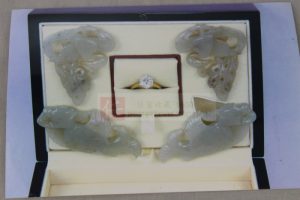
Example 1: Found with Ren Fu Collection’s Kangxi Zhini Pot No:443 and other excavated objects, were a set of four Liao Dynasty(907-1125 AD) hetian jades excavated from a Kangxi grave.(Hetian jades were authenticated by the History Museum of China, Beijing )
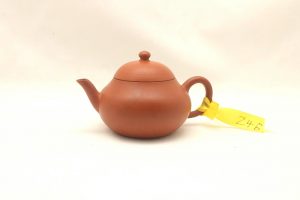
Example 2: Ren Fu Collection’s Early Qian Long Zhuni Pot No:246 with a Great Qing Qian Long reign mark was excavated from a Daoguang 17th year reign(1838) grave belonging to a woman indicating she collected a 100 year old Pot.
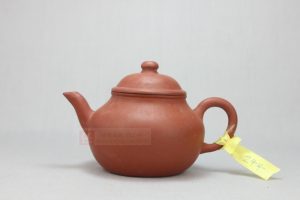
Example 3: Ren Fu Collection’s Zisha Pot No:244 was excavated from a Mingguo 17th year(1929) grave but the Pot is Yongzheng indicating the deceased collected Old Pot or nearly 200 year old Pot.
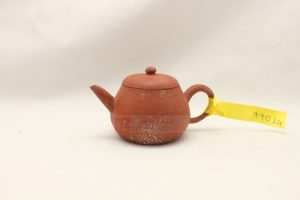
Example 4: Ren Fu Collection’s Early Qian Long Santoh Zhuni Pot No:440 excavated from a Tongzhi 12th year reign(1874) grave.
Example 5: Ren Fu Collection’s Daoguang Santoh Zhuni Pot No:442 excavated from a Guangxu 8th year reign(1883) grave.
Example 6: Ren Fu Collection’s Qian Long Santoh Zhuni Pot No:445 excavated from a Xianfeng 1st year reign(1852) grave.
And so many more other archaeological discoveries that revealed what Chinese immigrants in Nanyang collected or antiques collection in pre-Daoguang times.(we will leave some archaeological discoveries for the new owner or private museum who buys Ren Fu Collection’s 100 top grade Pots to tell the stories).
EVEN THE WEST GETS ITS FACTS WRONG ABOUT ITS HISTORICAL ARTEFACTS………………………..
The British claimed the Englishman named Robert Adams invented the first teacup with handle in 1750. Unfortunately there is proof that the German Johann Friedrich Bottger invented the teacup with handle much earlier in 1707.
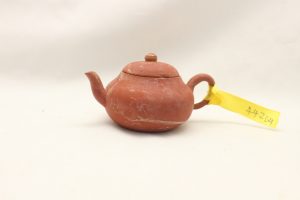
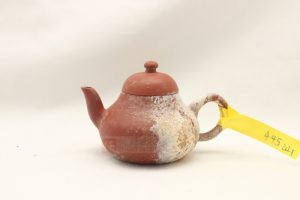
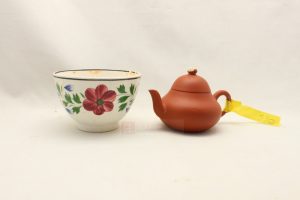
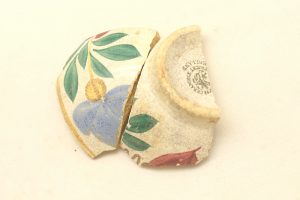
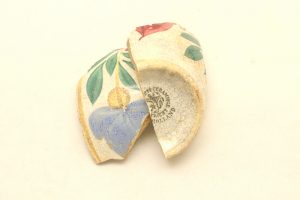
Now we do not know how the British keep records of her historical artefacts but we also have issues with the British in our excavated teacup with archaeological records. In Ren Fu Collection’s excavated Santoh Zhuni Pot No:330, a very rare and beautiful pre-art nouveau teacup was also found with the teapot and the story goes like this:
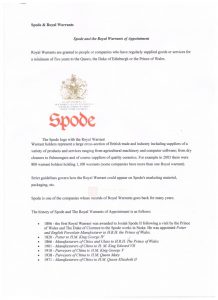
On the afternoon of the 13rd of April 1998 when Asia was reeling from the worst Financial Crisis, in the Nanyang, Ren Fu Collection’s rescue team excavated an exquisite Santoh Zhuni Pot including a piece of English porcelain history. That piece of British porcelain history is a beautiful and rare pre-Art nouveau Late Spode, Copeland and Jarrett teacup. It was excavated from a Daoguang 4th Year reign(1824) grave belonging to Xiong Ci Hui, a wife of a Guangren surnamed Zhou and daughter named Zhen Niang before her grave and many other graves in the historical burial site were demolished to make way for residential development. But strangely according to the museums’s archive, both the Victoria and Albert Museum, London and the Spode Museum, England stated that the company Copeland and Jarrett bought and took over the Spode family business in 1833 until 1847 where the business was owned outright by the Copeland family. So who is right?: Ren Fu Collection’s archaeological proofs say the teacup made by Late Spode, Copeland and Jarrett was made before 1824 but the British museums claim it was made between 1833 to 1847. Of course Ren Fu Collection is right because the teacup was excavated from a grave dated 1824 or Daoguang 4th Year reign which means the teacup was made before 1824 and definitely not between 1833 to 1847. However there might be an explanation for their mistake because they have admitted in their archive that there are very few early chop-marks to compare for references and they have excavated some Spode shards from the Spode site with chop-marks circa 1800-1833.
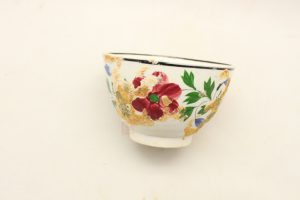
And that is not all- we have another similar teacup the Dutch says they are much earlier!
It’s a teacup with the same floral design and pre-Art nouveau but excavated from a Qian Long grave(see picture of broken Dutch teacup with broken Zisha Pot No:702). You can safely say the British or English copied the Dutch in this area of teacup design.
Note: Ren Fu Collection was supposed to notify the British museums of their mistakes but could not find the time and will do so eventually.
CAN THE ORIGINAL OWNER OF POT NO:248 NAMED ZHENG CHENG XU BE ONE OF THE DESCENDANTS OF ZHENG CHENG GONG OR BETTER KNOWN AS KOXINGA?………………………….
There was a saying in China in the old days, “If you want to escape capture for your crime or war in China or if you want to get rich go to Nanyang”. True because Nanyang was sparsely populated, full of natural beauties, rich biodiversity, abundant natural and mineral resources like spices, gold, tin, sulphur, rare woods, herbs to mention a few. Most Chinese went or immigrated to Nanyang in the past were for the second reason which was to look for better pasture but sometimes in rare instances, it was for the first reason the Chinese went to Nanyang like for example the Ex-Emperor or family of the defeated Chinese ruler running away as fugitive from the new Emperor to escape capture.
In 9th November 2018, Ren Fu Collection wrote a story about what Malaysian historians suspected might be a grave of a descendant of the fugitive Emperor JianWen located in Bukit Dato in Kuala Trengganu, Trengganu, West Malaysia. The grave was dated the 1st Year of Qian Long’s reign which is 1736 and the name of the owner was Zhu Qi Yu. Sadly the grave like other old graves in that historical burial site in Kuala Trengganu were demolished to make way for residential and commercial developments and the Malaysian historians only found about the gravestone epitaph after the grave had been bull-dozed and someone reported to the historians. Luckily before the bull-dozers demolished the grave, Ren Fu Collection undertook a rescue excavation on the afore-mentioned grave and including other graves in the historical burial site.(we are happy to say Ren Fu Collection had excavated and found a Zisha Pot and tea wares belonging to Zhu Qi Yu).
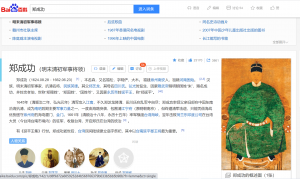
Wow, that was a possible descendant of the second Ming Emperor JianWen but now to another possible descendant of a NanMing(Southern Ming) General named Zheng Cheng Gong or better known as Koxinga in history. (Please note that these archaeological discoveries, among many of other Ren Fu Collection’s archaeological discoveries, are possible because of Ren Fu Collection’s huge archaeological net or if you prefer, extraordinary large scale excavation of thousands of graves and tombs which even surprised the Malaysian Ambassador to the United States when we showed him the archaeological proofs to our feat and made him become aware that Ren Fu Collection is doing very good things for Old Yixing teapots before he agreed to write a message in our book titled, “ Saving Old Purple-Sand Clay Teapots”). It’s not very often, in fact, it’s rare to come across grave/tomb of descendant of fugitive Emperor or in this case Koxinga, a great General of the Southern Ming Dynasty(NanMing) who is also a great historic figure, even with Ren Fu Collection’s thousands of excavations. Koxinga the mightiest of General of NanMing whose numerous victories over the Qing army caused such fear that at one point the Manchus considered returning to Manchuria and abandoning China. Yes, the Manchus were considering abandoning Beijing and moving their capital far away to a remote location for safety since Koxinga’s iron troops were rumored to be invincible.
This discovery of the possible descendant or relation of Koxinga was accidental and not due to the intended study and research of the Koxinga or anybody linked to him. We were trying to find out the big reason or the background to why Hui Meng Chen’s greatest creation, namely the revolutionary small Zhuni Hu, in Shunzhi’s reign was drowned out, muted, hardly noticed, not applauded or celebrated but only much later in Kangxi, Yongzheng and especially Qian Long’s reign. It was while investigating Hui Meng Chen greatest creation, the small Zhuni Pot, in Shunzhi’s reign and the emergence of Gong Fu tea culture in Early Kangxi that we stumbled upon the name of the owner of Pot No:248 which was excavated from an Early Kangxi 28th year reign tomb.( whose wife who died earlier was the original owner of the earliest excavated Early Kangxi Chen Ming Yuan Pot No:249). The name on the tombstone epitaph was Zheng Cheng Xu. And what’s more there were two more graves with the Zheng surname next to the wife’s grave. We categorize this kind of archaeological proofs as the 4th category which means the possibility of Zheng Cheng Xu being a descendant or relation of Koxinga is remote but possible. Now let’s look at the archaeological evidences and compare to the events in history that took place in China.
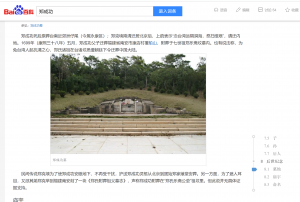
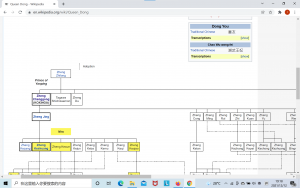
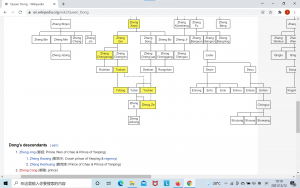
Firstly the tombstone epitaph read as: Zheng Cheng Xu died on 28th Year Reign of Emperor Kangxi(1690) and originated from Nan’an county, Fujian, China. Beside his tomb on the left was his wife’s earlier but disintegrated grave without gravestone epitaph and the two other graves with Zheng surnames next to her’s.. Now according to the official genealogy archive in Wikipedia both Zheng Cheng Xu is listed on the Zheng Zhi Long and Zheng Cheng Gong’s family tree.(Zheng Zhi Long was the father of Zheng Cheng Gong-see chart of family tree). And surprisingly the other two graves with the Zheng surname are also listed under Zheng Zhi Long and Zheng Cheng Gong’s family tree. The tomb of Zheng Cheng Xu looked austere and regimental indicating military connection while the earlier big disintegrated grave of the wife indicated affluence. The other two graves with the Zheng surname were affluent too.( as good as Guangren or Capitan China’s graves/tombs).
Secondly, the tombstone epitaph stated that Zheng Cheng Xu originated from or his ancestral home was Nan”an county, Quanzhou, Fujian, China which was also Zheng Cheng Gong’s father Zheng Zhi Long’s ancestral home which was Nan’an after his ancestors migrated from Henan. Nan’an still exist today.(Scholars or historians of Koxinga will be allowed to study and research our classified archaeological pictures,material and even human bone fragments for DNA).
Now history says that Koxinga, who was born in 1624 in Hirado, Hizen province, Japan and of half Japanese parentage, succeeded his father Zheng Zhi Long in 1650 as head of the powerful Zheng family after Zheng Zhi Long surrendered to the Qing forces in November 21, 1646. Koxinga pledged allegiance to the last NanMing Emperor Yongli and gave the Emperor protection in the Zheng family Fujian stronghold where the Qing forces had hitherto found difficult to take.
In 1661 Koxinga defeated the Dutch to capture Taiwan and set up the Kingdom of Tungning( modern-day Tainan, Taiwan) and died in 21 June 1662, the following year. He was succeeded by his son Zheng Jing as King of Tungning.
Koxinga led the longest and most sustained opposition to Qing rule but 21 years after his death, in 1683, Qing forces invaded Taiwan and brought it under Qing rule.
There were two exodus of Fujian people that happened, which were firstly during Koxinga’s retreat to Taiwan and secondly when Taiwan was brought under Qing rule which saw in the first Han Chinese especially Fujian people fleeing to Taiwan following Koxinga’s retreat to Taiwan and in the second,Han Chinese mostly Fujians fleeing Taiwan to the Nanyang after the Qing forces took Taiwan.
With this historical background we dare you to share and think out of the box with us and ask where in the Nanyang did the Southern Han Chinese, especially the Fujian people, go and what happened to the Fujian people especially the Zheng clan who fled to Nanyang?
And could Zheng Cheng Xu, the original owner of Pot No:248, who died in 1690(Kangxi 28th year reign) in the Nanyang be related to Zheng Cheng Gong better known as Koxinga?(See Wikipedia Zheng Zhi LongZheng Cheng Gong’s family tree chart).
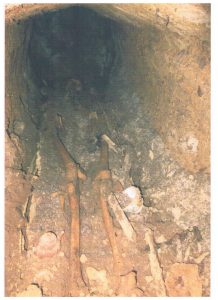
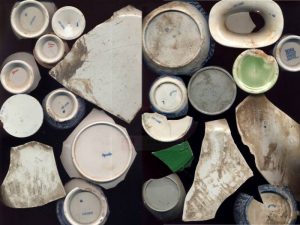
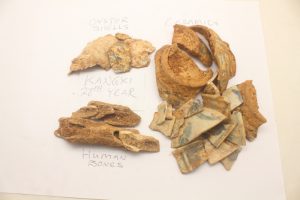
Whatever your opinions, we can agree nothing will be conclusive unless DNA samples are taken from the present day descendants of Koxinga in Tainan, Taiwan and match with Ren Fu Collection’s excavated human bones fragments belonging to Zheng Cheng Xu, the original owner of Ren Fu Collection’s Pot No:248 whose wife owned the Early Kangxi Chen Ming Yuan Pot No:249.(see picture of Ren Fu Collection human bone fragments, oyster shells and porcelain shards found with Pot No248).
But most important of all in the context of solving the mysteries or unresolved questions about Gong Fu tea and why Hui Meng Chen’s greatest creation of the revolutionary small Zhuni Pot in Shunzhi was not noticed, mentioned and greatly celebrated and also we are interested to know who and what tea culture and tea wares these Han Chinese brought with them to the Nanyang during the exodus which we will cover in the next part.
Note of caution: Please do not take this story of Zheng Cheng Xu, the original owner of Pot No:248, as having a relation to Koxinga as true facts until it is proven by DNA analysis of Ren Fu Collection’s excavated human bone fragments and Koxinga’s present day descendants in Tainan, Taiwan because doing so will be irresponsible and will be considered guess works even though it’s possible.
Note: When Ren Fu Collection makes a statement of facts we have to show pictures of tomb/graves and other archaeological proofs on top of the excavated Pots and tea wares to experts, scholars, researchers, historians or whoever are interested in the archaeological discoveries and proofs when the time comes.
Glossary:
- Kapitan China or capitan China(Dutch/English) was a high ranking government position in the civil administration of colonial Indonesia, Malaysia, Singapore, Borneo and the Philippines.
道光以前古董收藏家的考古证据……………………………
无论是历史沉船遗址上的海洋考古还是历史遗址上的陆地考古,没有什么能比挖掘历史埋葬遗址更好。海捞告诉你船载的是什么货物,历史遗址告诉你历史上那个时候在那里发生过什么活动。但是一个包含墓葬的历史埋葬地点讲述了更多的故事,比如人类历史和与死者一起埋葬的文物或物品的历史文化。在任富收藏的数千次发掘中,有一个故事讲述了死者收集的个人珍宝,甚至包括古董。今天,我们将向你们展示一些在南洋海上丝绸之路的国家发现清代道光以前时期的中国人墓葬中的古董文物。
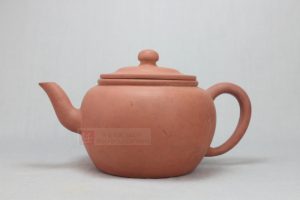
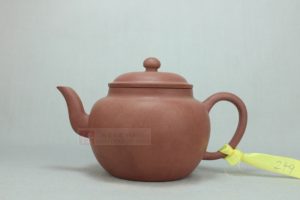
例子一:与任富收藏的康熙至443号壶和其他出土文物一起发现的是康熙墓出土的一套四个辽代(公元907-1125年)和田玉。(和田玉经北京中国历史博物馆鉴定)
例子二:任富收藏的早期乾隆朱泥壶246号,底款带有“乾隆年制”的巨大标记,是从道光17年(1838年)的一座坟墓中挖掘出来的,这座坟墓属于一位妇女,表明她收藏了一把有100年历史的壶。
例子三:任富收藏的紫砂壶244号是从民国十七年(1929年)的坟墓中挖掘出来的,但这把紫砂壶是雍正的,表明死者收藏了老壶或近200年的老壶。
例子四:从同治十二年(1874年)墓穴中挖掘出的任富收藏的早期乾隆汕头朱泥壶440号。
例子五:从光绪八年(1883年)的坟墓中挖掘出的任富收藏道光汕头朱泥壶442号。
例子六:从咸丰一年(1852年)墓中挖掘出的任富收藏乾隆汕头朱泥壶445号。
还有许多其他考古发现,揭示了南洋的中国移民在道光之前收藏的东西或古董收藏。(我们将把一些考古发现留给新主人或私人博物馆,他们购买了任富收藏的100个高档陶器来讲述故事)。
就连西方也对其历史文物有错误认识………………………
英国人称,1750年,名叫Robert Adams(罗伯特·亚当斯)的英国人发明了第一个带把手的茶杯。不幸的是,有证据表明德国的Johann Friedrich Bottger(约翰·弗里德里希·博特格)早在1707年就发明了带把手的茶杯。
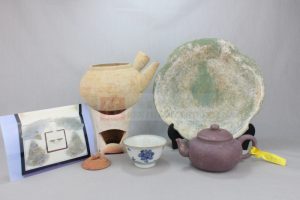
现在我们不知道英国人是如何保存其历史文物的记录的,但我们也与英国人在我们出土的带有考古记录的茶杯中存在问题。在任富收藏的发掘出的第330号汕头朱泥壶中,还发现了一个非常罕见和美丽的新艺术前茶杯,茶壶上有这样一个故事:
1998年4月13日下午,亚洲正遭受最严重的金融危机,在南洋,任富收藏的救援队挖掘出一个精美的汕头朱泥壶,其中包括一件英国瓷器历史。这件英国瓷器的历史是一件美丽而罕见的前新艺术主义晚期斯波德、科普兰和贾勒特茶杯。它是从道光四年(1824年)熊慈辉(音译)的坟墓中挖掘出来的。熊慈辉是一位姓周的官人的妻子和一位名叫甄娘的女儿,她的坟墓和历史墓地中的许多其他坟墓被拆除,以便为住宅开发让路。但奇怪的是,根据博物馆档案,,伦敦维多利亚( Victoria Museum ) 和阿尔伯特博物馆( Albert Museum ) 以及英格兰斯波德博物馆( London and the Spode Museum) 都声称,科普兰和贾勒特公司于1833年收购并接管了斯波德家族企业,直到1847年,该企业完全归科普兰家族所有。那么谁是对的呢?:任富收藏的考古证据表明,斯波德、科普兰和贾勒特茶杯是1824年以前制造的,但英国博物馆声称它是1833年至1847年间制造的。当然,任富收藏是正确的,因为茶杯是从1824年或道光四年统治时期的坟墓中挖掘出来的,这意味着茶杯是在1824年之前制造的,而绝对不是1833年至1847年间。然而,他们的错误可能有一个解释,因为他们在档案中承认,可供参考的早期印章很少,并且他们从斯波德遗址挖掘出了一些斯波德碎片,大约在1800-1833年间刻有印章。
这还不是全部——我们还有另一个类似的茶杯,荷兰人说他们要早得多!
这是一个具有相同花卉图案和前新艺术主义风格的茶杯,但它是从乾隆墓中挖掘出来的(见编号702破碎的荷兰茶杯和破碎的紫砂壶)。你可以放心地说,英国人在茶杯设计方面模仿了荷兰人。
注:任富收藏本应通知大英博物馆他们的错误,但找不到时间,最终会通知大英博物馆。


第248号壶的原主人郑成旭是否是郑成功的后代之一,或者更为人所知的郑成功?…………………………
在过去的中国有一句谚语:“如果你想逃避在中国的犯罪或战争,或者如果你想发财,就去南洋”。是的,因为南洋人口稀少,充满自然美景,丰富的生物多样性,丰富的自然和矿产资源,如香料、黄金、锡、硫磺、稀有木材、草药等等。过去,大多数中国人前往或移民到南洋是出于第二个原因,这是为了寻找更好的牧场,但有时在极少数情况下,这是出于第一个原因,中国人前往南洋,就像前皇帝或战败的中国统治者的家人一样,作为逃犯逃离新皇帝以逃避俘虏。回顾历史。
2018年11月9日,任富收藏写了一篇关于马来西亚历史学家怀疑的故事,该故事可能是位于马来西亚西部瓜拉丁加奴Bukit Dato的逃犯明代建文皇帝后裔的坟墓。这座坟墓的日期是乾隆元年(1736年),主人名叫朱启宇。可悲的是,这座坟墓和瓜拉丁加奴(Kuala Trengganu)历史墓地中的其他古墓一样,被拆除,以便为住宅和商业开发让路。马来西亚历史学家只是在坟墓被打盹并有人向历史学家报告后才发现墓碑墓志铭。幸运的是,在推土机拆除墓穴之前,任富收藏对上述墓穴进行了抢救性挖掘,包括历史墓地中的其他墓穴。(我们很高兴地说,任富收藏挖掘并发现了朱启宇的紫砂壶和茶具)。
哇,那可能是明朝第二代建文皇帝的后裔,但现在是南明将军郑成功的另一个可能的后裔,历史上很有名的是郑成功。(请注意,这些考古发现,以及任富收藏的许多其他考古发现,之所以有可能,是因为任富收藏拥有巨大的考古网,或者如果您愿意,是因为对数千座坟墓的大规模挖掘,这甚至让马来西亚驻美大使感到惊讶。),我们给他看了我们的壮举的考古证据,让他意识到任富收藏对古老的宜兴茶壶做了很多好事,然后他同意在我们的书中写一篇题为《拯救老紫砂泥茶壶》书籍写前言的文章。事实上,很少见到逃犯皇帝后裔的坟墓或南明大将军科辛加(郑成功)的坟墓,他也是一位伟大的历史人物,即使在任富藏品的数千次发掘中也是如此。郑成功是南明最强大的将军,他在清军的多次胜利引起了人们的恐惧,以至于满洲人一度考虑返回满洲并放弃中国大清。是的,满族人正考虑放弃北京,将首都迁到遥远的地方以确保安全,因为有传闻说,郑成功的铁军是不可战胜的。
这一发现是偶然的,并不是因为对郑成功或与他有联系的任何人的研究。我们试图找出一个大的原因或背景,为什么惠孟臣最伟大的作品,即革命小朱泥壶,在顺治统治时期被淹没、沉默、几乎不被注意、不被赞扬或庆祝,但直到康熙、雍正,特别是乾隆统治时期才被淹没。正是在考察顺治年间惠孟臣最伟大的创造物——小朱泥壶,以及康熙初年工夫茶文化的出现时,我们偶然发现了248号壶的主人的名字。248号壶是从康熙初年的一座墓中挖掘出来的。(其妻子早逝,是康熙早期最早出土的249号陈鸣远壶的原主人)。墓碑上的名字是郑成旭。而且在妻子的墓旁还有两座郑姓墓。我们将这类考古证据归类为第四类,这意味着郑承旭是郑成功后裔或亲属的可能性很小,但也有可能。现在让我们看看考古证据,并与中国历史上发生的事件进行比较。
首先,墓碑上的墓志铭是:郑成旭死于康熙28年(1690年),起源于中国福建省南安县。在他的坟墓旁边,左边是他妻子的早期但已解体的坟墓,没有墓碑墓志铭,旁边是另外两座郑姓坟墓。。现在,根据维基百科上的官方家谱档案,郑成旭和郑成功都被列在郑智龙和郑成功的家谱上。(郑志龙是郑成功的父亲见家谱图)。令人惊讶的是,另外两座郑氏墓也被列在郑志龙和郑成功的家谱下。郑承旭的陵墓看起来朴素而庄严,表明了军事上的联系,而早期的妻子的大坟墓则表明了富裕。另外两座郑姓墓也很富裕。(与中国官人或甲必丹的墓葬一样好)。
其次,墓志铭表明郑成旭来自中国福建泉州南安,或他的祖籍是中国福建泉州南安县,这也是郑成功的父亲郑志龙的祖籍,即其祖先从河南移民后的南安。南安今天依然存在。(郑成功的学者或历史学家将被允许研究我们的机密考古图片、材料,甚至人类骨骼碎片的DNA)。
现在历史上说,1624年出生于日本根省平多的郑成功有一半的日本血统,在1646年11月21日郑志龙向清军投降后,于1650年接替他的父亲郑志龙成为强大的郑氏家族的首领。国兴加宣誓效忠南明末代皇帝永利,并在郑家福建据点保护皇帝,清军至今难以攻占该据点。
1661年,郑成功打败荷兰人占领台湾,建立了东宁王国(现代台湾台南),并于1662年6月21日去世。他的儿子郑经接替他成为东宁王。
郑成功领导了最长、最持久的反对清政府的斗争,但在他去世21年后,1683年,清军入侵台湾,将其置于清政府的统治之下。
发生了两次福建人的外流,第一次是在郑成功撤退到台湾期间,第二次是在清朝统治台湾期间,在郑成功撤退到台湾后,第一批汉族人特别是福建人逃往台湾,第二批,清军占领台湾后,汉族人大多是从台湾逃到南洋的福建人。
在这样的历史背景下,我们敢大胆地与大家分享和思考,问问南洋的汉族人,特别是福建人,去了哪里,福建人,特别是逃到南洋的郑氏家族发生了什么?
而死于1690年(康熙28年)南阳的248号罐的原主人郑成旭,是否与郑成功(更广为人知的科兴加)有关?(见维基百科郑智龙正成功的家谱图)。
无论您的意见如何,我们都同意,除非从台湾台南的科兴加后裔身上提取DNA样本,并与任富收藏的郑成旭出土的人类骨骼碎片相匹配,否则没有什么是决定性的,任富收藏248号壶的原主人,其妻子拥有康熙早期陈鸣远壶号249。(见任富藏品图片:248号壶中发现的人骨碎片、牡蛎壳和瓷片)。
但最重要的是,在解开功夫茶的谜团或悬而未决的问题的背景下,以及为什么没有注意到惠孟臣在顺治最伟大的革命小朱泥壶的创作,这就是我们感兴趣的原因,这些汉族人在大迁徙期间,这些汉族人把谁、和什么茶文化、和茶具带到了南洋,我们将在下一部分介绍。
注意事项:请不要将248号壶的原主人郑成旭的故事视为与郑成功有关的真实事实,除非通过对任富收藏的出土人类骨骼碎片和科兴加在台南的后代进行DNA分析证明,因为这样做是不负责任的,即使有可能,也会被认为是猜测。
注:当任富收藏陈述事实时,我们必须向专家、学者、研究人员、历史学家或任何对考古发现和证据感兴趣的人展示坟墓的照片和其他考古证据。
词汇表:
- Kapitan China或capitan China(甲必丹荷兰语/英语)是殖民地印度尼西亚、马来西亚、新加坡、婆罗洲和菲律宾民政管理部门的高级政府职位。