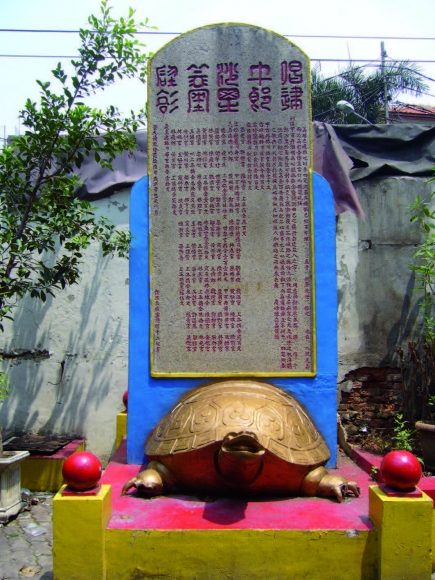
Plate 2 – Stele commemorating the foundation of the Gunung Sari Cemetery in 1761
碑文2——纪念1761年贡贡墓地奠基
Photo: C. Salmon, 2015
照片:C.鲑鱼,2015年
13Other cemeteries opened elsewhere too, in particular in the region of Kramat, where the German naturalist Junghuhn (1809-1864) reported the existence of Chinese graves towards 1840. He says:24
24 Friedrich Franz Wilhelm Junghuhn, Topographische und naturwissenschaftliche Reisen durch Java, Magd (…)
25 This is in fact the Jakatra fort built by the Dutch to the South-East of the walled city.
There are two Chinese cemeteries near Batavia. A small one close to Kramat, to the East of the road leading to Buitenzorg [now Bogor] and a bigger one between Batavia and Gunung Sari, in a region where walls of the old Jakarta25 half hidden in the greenery are to be found.
26 See Map 2.
14The reason why Junghuhn and his contemporary Eduard Selberg26 do not allude to the cemetery of Tanjung is perhaps that it was still off the beaten track.
15In the 20th century other new sites were opened on the outskirts of the town, in particular at Bidara Cina (South of Jatinegara), near Bogor road, and at Kampung Dalam, south of Tebet.
Demolition of the Old Chinese Graveyards after Independence
27 For a very good study of the closure of the Chinese cemeteries of Surabaya in 1958 by the municipal (…)
28 See the location of the Western cemetery on the map of Jakarta of 1968 (Map 4).
16After Independence, urban development was such that land became extremely expensive and the existence of graveyards within the city seriously threatened.27 The Gunung Sari cemetery was gradually parcelled out and the stele of 1761, near the Dizang yuan is virtually the only reminder that this whole vast area was once filled with graves. The same thing happened to the West where the superficies occupied by Chinese tombs was even bigger, and new districts grew up, replacing the burial grounds.28 In the Kota Bambu region (to the north of Slipi), we saw the last tombs being demolished by the inhabitants in 1975, but it was impossible to attempt any resistance against this rush on land. Absolutely nothing has been left to show what the former use of the area was, although the former cemeteries were characterised by impressive constructions influenced by the European architecture of that time. Land had become expensive everywhere, even in the suburbs, and it was no longer possible to buy burial ground in perpetuity.
29 Cremation was almost universal in the capital Hangzhou 杭州 and the city crematory ovens (then called (…)
30 See Sinar Harapan, 19 Augustus 1973, “Gobernor DKI Tutup Tempat Pengabuan di Muara Karang.”
17Cremation has become virtually the sole solution for many Indonesian Chinese of small means. If in mainland China cremation started to be widely used by the population living in the capital and in the major cities of the Song times where land was very expensive,29 in Indonesia it is a fairly recent phenomenon which from a religious point of view is connected with the progress of Buddhism. The writer and theosopher Kwee Tek Hoay 郭德怀, who died in 1951, was apparently the first to ask to be cremated. Since then, thousands of Indonesian Chinese have followed his example. Two crematoria were built, one at Muara Karang (northwest of the city) in 1958, sponsored by two associations, Jajasan Shamsan Bumi and Gabungan Sam Kauw 三教 Indonesia, and the other, almost at the same time, at Jelambar Ilir (area of Grogol), sponsored by the Jajasan Krematorium which was linked with the Gongguan or Council of the Chinese. The first, which practised open-air cremation, was closed in 1973 by the authorities because of the disturbance it caused to the neighbouring inhabitants.30 The second was also shut not long after, while a new cremation oven was founded in Cilincing in 1975 with improved facilities. A colombarium was added with special sections for Buddhists and Christians (see Map 3). Moreover Cilincing being close to the coast, the families could also easily disperse the ashes of the deceased into the sea. Since the early 2000s new crematoria were opened in relation to the crisis faced by municipal cemeteries inside the city.
13其他墓地也在其他地方开放,特别是在克拉马特地区,德国博物学家容胡恩(Junghuhn,1809-1864)在1840年报告了中国坟墓的存在。他说:24
24 Friedrich Franz Wilhelm Junghuhn,《爪哇岛地形图与自然感》杂志(…)
25事实上,这是荷兰人在这座有城墙的城市东南部修建的雅加达拉要塞。
巴达维亚附近有两个华人墓地。在通往Buitenzorg(现在的茂物)的公路以东,克拉马特附近有一座小型建筑,巴达维亚和古农沙里之间有一座较大的建筑,在这个地区,可以找到半掩在绿树中的古老雅加达25的城墙。
26见地图2。
14容格胡恩和他同时代的爱德华德·塞尔伯格之所以没有提到丹戎公墓,可能是因为它还没有走上正轨。
15在20世纪,在该镇的郊区开辟了其他新地点,特别是在靠近茂物路的比达拉·齐纳(贾蒂尼加拉以南)和特贝特以南的甘榜达拉姆。
独立后拆除中国的旧墓地
27对泗水市1958年关闭中国公墓一事进行了很好的研究(…)
28见1968年雅加达地图(地图4)上的西部公墓位置。
16独立后,城市发展使得土地变得极其昂贵,城市内墓地的存在受到严重威胁。27古农纱丽公墓逐渐被分割开来,地藏院附近1761年的石碑几乎是唯一的提醒,这片广阔的区域曾经被坟墓填满。同样的事情也发生在西部,那里的中国陵墓占地面积更大,新的区域不断发展,取代了墓地。28.在科塔班布地区(斯里皮以北),我们看到了1975年居民拆除的最后一座坟墓,但我们不可能试图抵抗这场陆地上的匆忙。尽管以前的墓地的特点是受当时欧洲建筑影响的令人印象深刻的建筑,但绝对没有留下任何东西来显示该地区以前的用途。各地的土地都变得很昂贵,甚至在郊区也是如此,再也不可能永久购买墓地。
29火葬在首都杭州几乎普及杭州 还有城市的火葬炉(当时叫(…)
30见希纳尔·哈拉潘(Sinar Harapan),1973年8月19日,“我在穆阿拉卡拉格的彭加布安(Pengabuan di Muara Karang)”一书
17火葬几乎已成为许多经济拮据的印尼华人的唯一解决办法。如果说在中国大陆,火葬开始被居住在首都和土地非常昂贵的宋朝主要城市的人们广泛使用,29在印度尼西亚,火葬是一种相当新的现象,从宗教角度来看,它与佛教的进步有关。作家兼神智学家Kwee Tek Hoay郭德怀, 他于1951年去世,显然是第一个要求火化的人。从那时起,成千上万的印尼华人效仿了他的做法。两座火葬场于1958年建成,一座位于穆阿拉卡朗(该市西北部),由贾贾桑·萨姆桑·布米和加邦根·萨姆·考夫两个协会赞助三教 印度尼西亚,以及几乎同时在杰兰巴尔·伊利尔(Grogol地区)举行的另一场,由贾贾桑(Jajasan)火葬场赞助,该火葬场与公馆或华人理事会有联系。第一家实行露天火葬,由于对邻近居民造成干扰,当局于1973年关闭了这家火葬场。30第二个火葬炉也在不久后关闭,1975年,在慈林青建立了一个新的火葬炉,设施得到了改进。科伦坡博物馆增加了佛教徒和基督教徒专用区(见地图3)。此外,由于靠近海岸,这些家庭还可以轻松地将死者的骨灰撒入海中。自21世纪初以来,新的火葬场因城市内市政公墓面临的危机而开放。
Map 4 – Detail of a map of Jakarta showing the remnants of the western cemeteries in the late 1960s.
地图4——雅加达地图的细节,显示了20世纪60年代末西部墓地的遗迹。
Source: Peta Djakarta, Djakarta – Surabaya : Pembina, Edisi 1968
资料来源:雅加达善待动物组织,雅加达-泗水:彭比纳,埃迪西1968
Chinese Burial Grounds in the Eyes of European Travelers
- 31The Qingming was celebrated on the 5th of the 4th semilunar month.
- 32For a fuller list, see Salmon & Lombard, Les Chinois de Jakarta, pp. 281-282.
18It is worthy of note that a great number of the Europeans who came to Batavia between the 17th and the mid-19th century were extremely keen to visit the Chinese cemeteries in order to enjoy the atmosphere emanating from these funerary landscapes, as they would have done in a public garden, and for some of them—ethnographers avant-la-lettre—also to observe the rituals practiced during the Feast of the Dead or Qingming,31 as well as during funerals. Their records are highly valuable because they are the only testimonies of the manner the Chinese reshaped the landscapes in order to create a peculiar atmosphere and give the impression that death was a continuation of life, though in a separate realm. Here we will limit ourselves to four observers.32
- 33Guy Tachard, A Relation of the Voyage to Siam Performed by Six Jesuits sent by the French King, to (…)
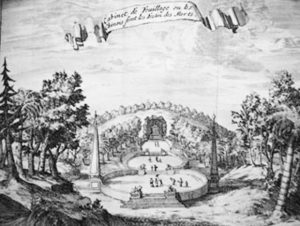
19One of the first was the French Jesuit Guy Tachard (1648-1712) who was in Batavia in 1684. He happened to visit the cemeteries near the Fort of Jakatra and left the following description which gives a good idea of the landscape and the space arrangement which provided altogether a beautiful perspective and a pleasant atmosphere:33
As we went out of Batavia we found three or four of these Walks, all which at their end, met at the chief Gate, by which we went out, we took the middlemost, which was our way to the place intended. (…) Within half a League we found the first burying Place of the Chineses in a Coppis Wood, where they had made several small Paths, which all led to several Sepulchres. There it is where the Chinese of mean Quality are buried, and indeed the Place is somewhat in disorder, and there is nothing of State in their Tombs: a few steps from thence stands the little Fort of Jakatra; (…) Beyond that Fort we entered into a Wood, or rather into a large Champian full of little Hills, covered over with Groves and Thickets on all sides, which yielded a pretty pleasant Prospect, and in that second Burying-place the Chinese bonzes interr the Persons of Quality of their Nation. Upon the top of one of those little hills I saw an Arbour very well made, and a Table standing in the middle of it, with Benches all around it, where nearly forty People might commodiously sit. There I saw a great many odd antick Idols hanging upon the Branches that covered this Arbour. They say that the bonzes make Feasts for the dead, and bring them thither for them to eat; most part of these Tombs are so many little Mausoleums, very neat and pretty; here is the figure of one of the loveliest of them made after (Plate 3), by which you judge of the rest, for they are all made after the same Fashion, with difference only, that some have Dragons in stead of Lyons upon the Gate, as you enter into them, and that they are more or fewer Steps high, according to their Magnificence.
Being come out of the Burying-Place, we heard the Noise of Cimbal and little Bells, and following the Sound, came to a little Temple of the Chineses, where their Priests were assembled to offer Sacrifice.
- 34 Cheng Xunwo, Gelaba jilüe 口葛喇吧纪略, in Xunmintang congshu 逊敏堂丛书, p. 4. Cheng Xunwo was in Batavia (…)
20Tachard also provides the unique description of the ceremonies made by monks in a funerary temple, very likely the Baoen si 报恩寺 or “Temple of the Filial Gratitude” which is briefly mentioned in Cheng Xunwo 程逊我’s travelogue.34 The temple has since been destroyed, perhaps during the troubles of 1740.
- 35Cornelis de Bruyn, Reizen over Moskovie, door Persie en Indie, Amsterdam; translated from the Frenc (…)
21Cornelis de Bruyn (ca.1652-ca.1727), Dutch artist and traveler, who sojourned in Batavia in 1706, visited the Chinese cemetery at the time a deceased person was buried. After having described the coffin and the manner the tomb was prepared, he gives an interesting description of the funeral ceremony, which in the French version is accompanied by two rather accurate drawings (Plates 4 & 5):35
- 36Joosje, from the Portuguese Deos, Cf. Hobson-Jobson. A glossary of Anglo-Indian colloquial words an (…)
When I arrived in this place, some people were busy making one of these tombs for a person that they were going to bury. The convoy went there shortly after, & I saw several tents equipped with all necessary things for the kitchen and the tables set. I watched carefully all the ceremonies of the convoy, which resembled a procession, because of the large number of persons it was composed of, and the ornaments they wore, namely flags, parasols, and a canopy in which they carried one of their Saints known as Joosje.36 I also heard the sound of a few things. When the body has come to the place where it was to be buried, everything was done quickly and in a very good order (…): They threw some coins into the grave and then put in the body. A priest who was standing near the grave, carried a book, in which he read; there was another priest next to him, with a silver dish filled with seeds which from time to time he threw to the audience, on the coffin and on the child of the woman who had just been put into the grave; the child standing on the other side of the tomb, was covered with a dress of raw canvas, passed over his head, after the manner of the ancients (…) This child, who was no more than ten years old did the same several times, and each time returned to his place according to the order he received from the onlookers, among whom was his father dressed in white. Then the priest ordered the said child to spread a few handfuls of earth on the coffin of his mother, and thus ended the ceremony. While people were busy preparing the cement, we started eating with more than five hundred persons among whom were several women dressed in white (…) We remained there under the trees, until the evening. One sees everywhere thousands of small circular hills of ten to thirty feet high, which are separated from each other by narrow depressions. Many line up side-by-side along the side.
Plate 3 – A sumptuous 17th-century Chinese grave in Batavia
欧洲游客眼中的中国墓地
31清明节是在四月初五庆祝的。
32关于更完整的列表,请参见《雅加达中国人报》三文鱼与伦巴第,第281-282页。
18值得注意的是,17世纪至19世纪中叶来到巴达维亚的许多欧洲人都非常热衷于参观中国墓地,以享受这些墓地景观所散发的气氛,就像他们在公共花园中所做的那样,对他们中的一些人来说,民族志学家avant la lettre还观察了在死者的盛宴或清明(31岁)以及葬礼期间举行的仪式。他们的记录非常有价值,因为它们是中国人重塑景观的唯一证据,目的是创造一种特殊的氛围,给人留下死亡是生命的延续的印象,尽管死亡是在一个独立的领域。在这里,我们将仅限于四名观察员。32
33盖伊·塔查德,法国国王派来的六位耶稣会士到暹罗的航行的亲属,到(…)
19第一个是1684年在巴达维亚的法国耶稣会士盖伊·塔查德(Guy Tachard,1648-1712)。他碰巧参观了雅加达堡附近的墓地,并留下了以下描述,其中对景观和空间布局有了很好的了解,提供了一个美丽的视角和宜人的氛围:33
当我们走出巴达维亚时,我们发现其中有三四条小路,都在尽头,在正门处汇合,我们从正门出去,我们走了最中间的一条路,这是我们通往目的地的路。(…)不到半个联盟,我们就在一片铜林中找到了中国人的第一个埋葬地,他们在那里修筑了几条小径,所有小径都通向几座坟墓。那里埋葬着品质低劣的中国人,确实有些混乱,他们的坟墓里没有任何国家的东西:离那里几步远的地方是雅加达小城堡;(……)在那座堡垒的另一边,我们走进了一片树林,或者更确切地说,走进了一座满是小山的大山丘,四周都是小树林和灌木丛,景色十分宜人。在第二个埋葬地,中国人的尸骨埋葬了他们国家的优秀人物。在一座小山的山顶上,我看见一座凉亭做得很好,桌子中间摆着一张桌子,四周都是长凳,将近四十人可以坐得很稳。在那里,我看到许多古怪的偶像挂在覆盖着这片树林的树枝上。他们说,白骨人为死者设宴,并把他们带到那里吃;这些陵墓大部分都是小小的陵墓,非常整洁漂亮;这是其中一个最可爱的塑像(图版3),你可以根据它来判断其他的塑像,因为它们都是按照同样的方式制作的,只是不同而已,当你进入它们的时候,它们的门上有龙而不是里昂,而且根据它们的壮丽程度,它们有多少台阶高。
从墓地出来后,我们听到了Cimbal和小铃铛的声音,跟着声音,来到了一座中国人的小寺庙,他们的祭司聚集在那里献祭。
34比照程训沃、格拉巴·吉吕埃口葛喇吧纪略, 在寻名堂丛书逊敏堂丛书, p、 四,。程迅沃在巴达维亚(…)
20Tachard还提供了僧侣在葬礼寺庙(很可能是宝恩寺)举行的仪式的独特描述报恩寺 或《成训》中简略提到的“孝观”程逊我’这是一本游记。34这座寺庙后来被摧毁,可能是在1740年的动乱期间。
35科内利斯·德·布吕恩,莫斯科上空的雷赞,独立门,阿姆斯特丹;翻译自法语(…)
荷兰艺术家和旅行家科内利斯·德·布鲁恩(Cornelis de Bruyn,约1652-1727年)于1706年在巴达维亚定居,在一名死者被埋葬时参观了中国公墓。在描述了棺材和坟墓的准备方式之后,他对葬礼进行了有趣的描述,在法文版中,葬礼附有两幅相当准确的图纸(图版4和5):35
36 Joosje,来自葡萄牙Deos,参见Hobson Jobson。英印口语词汇表
当我到达这个地方时,一些人正忙着为他们要埋葬的人建造一座这样的坟墓。车队不久就去了那里,我看到几个帐篷,里面装着厨房和桌子所需的一切东西。我仔细地观看了车队的所有仪式,因为车队由许多人组成,他们身上戴着各种装饰物,比如旗帜、阳伞和一顶顶篷,上面有一位圣徒,名叫约斯杰,所以车队的仪式很像一个游行队伍。36我还听到了一些声音。当尸体到达埋葬地点后,一切都很快地、井然有序地完成了(…):他们往坟墓里扔了一些硬币,然后放进了尸体。站在坟墓附近的一位牧师拿着一本书,他在书中读着;他旁边还有一个牧师,手里拿着一个装满种子的银盘子,不时地把种子扔给观众,放在棺材上和刚刚被放进坟墓的那个女人的孩子身上;站在坟墓另一边的那个孩子,身上覆盖着一件粗帆布的衣服,头上盖着一件衣服,仿效古人的方式(……)这个不超过十岁的孩子也这样做了几次,每次都按照旁观者的命令回到自己的位置,其中有他穿白色衣服的父亲。然后,牧师命令这个孩子在他母亲的棺材上撒上几把土,仪式就这样结束了。当人们忙着准备水泥时,我们开始和500多人一起吃饭,其中有几个穿着白色衣服的女人(…)我们一直呆在树下,直到晚上。到处都可以看到成千上万个10到30英尺高的圆形小山,这些小山被狭窄的洼地隔开。许多人并排在一起。
图版3——巴达维亚一座17世纪奢华的中国坟墓
Source: Guy Tachard, A Relation of a Voyage to Siam, 1687
资料来源:盖伊·塔查德,一位前往暹罗的亲戚,1687年
Plate 4 – Chinese mausoleum in Batavia, drawing by Cornelis de Bruyn
图版4——巴达维亚的中国陵墓,由科内利斯·德·布鲁恩(Cornelis de Bruyn)绘制
Source: Voyages de Corneille le Brun, par la Moscovie… et aux Indes Orientales, 1718
来源:Chanelle Le Brun,Par La MascVivie等人的航程,1718
Plate 5 – Funeral ceremony in Batavia, drawing by Cornelis de Bruyn
图版5——巴达维亚的葬礼仪式,由科内利斯·德·布鲁恩绘制
Source: Voyages de Corneille le Brun, par la Moscovie… et aux Indes Orientales, 1718
来源:Chanelle Le Brun,Par La MascVivie等人的航程,1718