A Short Notice:
Some of Ren Fu Collection’s archaeological material and discoveries are potential citations in the future and we allow people to cite them for educational purposes and not for undesirable purposes like for committing frauds.
Ode to the Small Meng Chen Zhuni Pot
Why are people talking about you when there is no archaeological proof you existed?
Why are most Old Zisha Pots Meng Chen Zhuni Copies when there is no archaeological proof you existed?
Why didn’t the famous Late Ming Zisha Hu historian Zhou GaoQi write about you when you are the most famous Potter of all times?
Why did Gong Fu tea spring up so gloriously without mentioning it was because of you?
And why did the great tea-loving Qian Long Emperor’s name graced only you and no others?
Yes, thanks to Ren Fu Collection’s archaeological proofs we now know why!
REN FU COLLECTION’S GREATEST ARCHAEOLOGICAL DISCOVERIES:
HUI MENG CHEN SMALL ZHUNI POT AND GONG FU TEA…………….
1) FINDING HUI MENG CHEN THROUGH DOCUMENTED HISTORY AND ARCHAEOLOGY……….
Archaeology is the scientific study of the material remains of past human life and activities.(as defined by Britannica). They say archaeologists know more than anybody else about human life and activities in the ancient past.
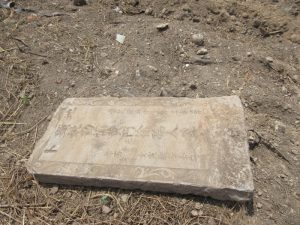
Take for example Ren Fu Collection’s thousands of excavated teapots and tea wares with archaeological records which have given us the vast archaeological knowledge and experience like to mention a few: how we can tell the origin(Fujian or Guangdong or other provinces of China) of the deceased just by looking at the shape and style of the grave/tomb or the social status of the deceased by looking at the size of grave, the quality of grave court that preceded the grave, mating(墓庭), built of masonry and the quality of tablets. The tablets made of granite imported from Fujian for those who can afford the expense or tablets made of cheap local white madrepore. The graves/tombs of Chinese immigrants in Pre-Daoguang Nanyang countries like Indonesia, Malaysia, Vietnam, Thailand or the Philippines might be different but the tea wares excavated were the same originated from China. And the moment we excavated a grave, whether it was a deep, shallow grave, hard concrete or soft top soil , high quality or cheap wood coffin, the spot in the grave/tomb where the teapot and tea wares were found like beside the head, on the belly, in between the thighs, besides the legs, at the feet, and the other personal things like jeweleries, coins, jades, ink slab, eye glasses, scissors, fish hooks, opium pipes and even foods like oysters.etc.. which all tell us about past human life and activities like as if we were transported to Pre-Daoguang times like for example the idiosyncratic burial paraphernalia of oyster shells and fish hooks tell us the deceased was Fujian as Fujian loved oysters and sea life like fishing or in Daoguang graves of Guangdong or Chao Zhou people mostly Santoh Zhuni Pots were found. Sometimes we even come across descendants of Emperor or great Chinese General. (Please note that Ren Fu Collection had a policy of rescuing only objects of Art but not personal jewelries belonging to deceased).
Finding the truth in Old Zisha Hus without archaeological proofs is like looking for a needle in a haystack. Or insufficient archaeological proofs can still make the task of research daunting like for example the Chen Ming Yuan Zhuni Pot with Gong Fu tea wares excavated from Lan Guo Wei’s grave in ZhangPu County in 1990 only proved archaeologically Gong Fu Tea existed in Qian Long 23rd Year Reign(1759) and nothing else or the Tianqi 7th Year Reign Hui Meng Chen High Lantern-shaped Zisha Pot in the Victoria and Albert Museum only proved that Hui Meng Chen started making Pots before Tianqi 7th Year Reign and nothing else or that no Zhuni Pots were found in the ancient Dragon kiln sites on Yangjiao Mountains in Yixing proved that Zhuni Pots were not made in Yixing but where? With sufficient archaeological proofs, finding the truth in Old Zisha Hus is like putting the missing parts together in a jigsaw puzzle. And along the way to finding the truth, we stumbled upon facts of past human life like SiTing Hus were collected by women and SiTing was very likely a woman Potter or men preferred to collect big globular Pots or Wendan, Dragon egg-shaped Pots and the likes, or most Pre-Daoguang emigrant Fujian people had a taste for fine high grade Zhuni Pots and so. In a way you can say going through Ren Fu Collection’s huge archaeological trove is like being there with the Late Ming Zisha Hu historian Zhou GaoQi writing about past Yixing Potters.
In the field of study and research of Hui Meng Chen, nowhere else in the world provided this massive archaeological data as Ren Fu Collection so that study and research can go into great depth and scope as never before. Ren Fu Collection’s excavated small Meng Chen Zhuni Hus belonged to immigrant Chinese which are unlike ship-wrecked big Meng Chen Zisha Pots for export. One ship-wrecked cargo is one Niande( or Reign Year) whereas Ren Fu Collection’s thousands of Pots were excavated from graves/tombs with Niandes covering every Emperor’s reign year like for example Qian Long 1st Year Reign, 2nd Year Reign, to 28th Year Reign to 59th Year Reign and so forth for Daoguang, Jiaqing, Yongzheng and Kangxi.( Ren Fu Collection’s 2nd and 3rd One Thousand Pots’ combined study and research value is immeasurable and will take years to complete work for the next purveyor)
Hui Meng Chen was the most elusive Potter that ever lived because unlike other Old Potters whose works were either in Late Ming or in the Qing period, Hui Meng Chen’s works belonged to both the Late Ming and the start of the Qing period making any conclusion of Hui Meng Chen’s works based on anything but solid archaeological proofs, treacherous bearing in mind the famous Late Ming Zisha Hus historian Zhou GaoQi did not even notice Hui Meng Chen’s works in Tianqi reign which must mean Hui Meng Chen’s Late Ming works were mediocre and unimpressive.
一个简短的通知:
任府收藏的一些考古材料和发现是未来的潜在引用,我们允许人们出于教育目的引用它们,而不是出于欺诈等不良目的。
小孟臣朱泥壶颂词:
当没有考古证据证明你存在时,人们为什么谈论你?
为什么在没有考古证据的情况下,大多数老紫砂壶都是孟臣朱泥壶的复制品?
为什么明末著名的紫砂壶历史学家周高起没有写你,而你是历史上最著名的陶艺家?
为什么功夫茶如此光彩夺目却不提是因为你?
为什么伟大的爱好茶的乾隆皇帝的名字只给你增色而没有给别人增色?
是的,感谢任富收藏的考古证据,我们现在知道了原因!
任富收藏最伟大的考古发现:
惠孟臣小朱泥壶和功夫茶……………
1) 通过文献记载历史和考古发现惠孟臣…………
考古学是对过去人类生活和活动的物质遗迹进行的科学研究。(根据大英百科全书的定义)。他们说考古学家比任何人都更了解古代人类的生活和活动。
以任富收藏的藏品为例,其数千件出土茶壶和茶具都有考古记录,这为我们提供了丰富的考古知识和经验,我想举几个例子:我们如何通过观察坟墓的形状和样式,或通过观察死者的社会地位,就可以判断死者的起源(福建或广东或中国其他省份)看看坟墓的大小,坟墓前的墓园的质量, 墓庭, 由砖石和石板建成。由福建进口的花岗岩制成的牌匾,供有能力支付费用的人使用,或由廉价的本地白马德雷制成的牌匾。在道光之前的南洋国家,如印度尼西亚、马来西亚、越南、泰国或菲律宾,中国移民的坟墓可能有所不同,但出土的茶具都来自中国。我们挖掘坟墓的那一刻,无论是深的、浅的坟墓、坚硬的混凝土或软的表层土壤、优质或廉价的棺材,坟墓中发现茶壶和茶具的地方,比如头旁、腹部、大腿之间、腿旁、脚旁,以及珠宝、硬币、玉石、墨砚、眼镜、剪刀、,鱼钩,鸦片烟斗,甚至牡蛎之类的食物。等这些都告诉我们过去的人类生活和活动,比如我们被穿越到道光之前的时代,比如牡蛎壳和鱼钩等特殊的埋葬工具告诉我们死者是福建,因为福建喜欢牡蛎和海洋生物,比如钓鱼,或者在广东或潮州人的坟墓中发现的大多是汕头朱泥壶。有时我们甚至会遇到皇帝或中国大将军的后裔。(请注意,任富收藏的政策是只抢救艺术品,不抢救死者的个人珠宝)。
在没有考古证据的情况下,在老紫砂壶发现真相就像大海捞针。或者说,考古证据不足时仍然会使研究任务变得艰巨,例如1990年在福建省漳浦县兰国维墓中出土的陈鸣远朱泥壶,里面有功夫茶具,但考古学上仅证明功夫茶存在于乾隆二十三年(1759年),没有其他证据,也没有其他证据,或者是公元七年天启年间的惠孟臣高灯笼形状的紫砂壶,在维多利亚和阿尔伯特博物馆只证明了惠孟臣在天启七年之前就开始制作陶器,而在宜兴羊角山的古龙窑遗址上没有发现任何朱泥壶,这证明了朱泥壶不是宜兴制造的,但在哪里?有了足够的考古证据,在老紫砂壶中找到真相,就像把缺失的部分拼凑在一块的拼图。在寻找真相的过程中,我们偶然发现了过去人类生活中的一些事实,比如“思亭”款朱泥壶是由女性收集的,思亭壶很可能是一位女性陶艺家,或者男性更喜欢收集大的球形壶或文旦、龙蛋形壶等,或者大多数道光移民前的福建人喜欢精美的高级朱泥壶等等。在某种程度上,你可以说,翻阅任富收藏的巨大考古宝藏就像是在那里与已故的紫砂壶历史学家周高起一起写关于过去宜兴陶艺家的文章。
在惠孟臣的研究领域,世界上没有其他地方像任富收藏这样提供了如此大量的考古资料,使研究能够前所未有地深入和广度。任富收藏出土的小孟臣朱泥壶属于中国移民带过来南洋的,与船只失事的出口大容量的惠孟臣款紫砂壶不同。一船失事货物是只有一个年代的时间(或统治年),而任富藏品的数千个功夫茶具和宜兴紫砂壶是从坟墓中挖掘出来的,年代覆盖了每个皇帝的统治年,例如乾隆一年、二年、二十八年至五十九年,道光、嘉庆、雍正和康熙等。(任富收藏的第二和第三个一千套茶罐的综合研究和研究价值是不可估量的,需要几年时间才能为下一个供应商完成工作)。
惠孟臣是有史以来最难以捉摸的陶艺家,因为与明末清初的其他老陶艺家不同,惠孟臣的作品既属于明末清初,也属于清初,因此对惠孟臣的作品做出任何结论都不是基于可靠的考古证据,背信弃义明末著名的紫砂壶历史学家周高起甚至没有注意到明末天启时期的惠孟臣的作品,这一定意味着惠孟臣的晚明作品平庸和不起眼。



There are two schools of thought: one says Hui Meng Chen lived from Wanli to Chongzhen and another says Hui Meng Chen lived from Kangxi to Yongzheng. In the book titled, “ A Taste of Zisha Teapots”, a book based on the combined research efforts of the Nanjing Museum and Mai Foundation of Taiwan, it was claimed Hui Meng Chen must be the latter, an Early Qing Potter, a contradiction which was later exposed when they found a Tianqi 7th Year Hui Meng Chen Zisha Pot in the Victoria and Albert Museum. The former claim that Hui Meng Chen was Wanli to Chongzhen was partially correct but two big questions remained to be answered: where was the famous small Zhuni Hus that Hui Meng Chen was famous for made and why Zhou Gao Qi did not see the small Meng Chen Zhuni Pot? The simple answer must be after Zhou GaoQi and before the first Meng Chen Zhuni Copies and Gong Fu tea appeared. And Gong Fu Tea appeared in Early Kangxi and the first Meng Chen Zhuni Copies appeared in Late Kangxi. The former is backed by documented historical proof based on the Late Ming book written by Zhou GaoQi titled, “ An Account of YangXian Teapots” and the latter two proven by the earliest excavated Gong Fu tea wares in Early Kangxi and the earliest excavated Meng Chen Zhuni Copies in Late Kangxi with archaeological proofs, Ren Fu Collection has Pots from Late Ming to the Middle Qing in its first One Thousand Pots.
有两个学派:一个说惠孟臣从明朝万历到崇祯时期,另一个说惠孟臣从清朝康熙到雍正时期。在《紫砂汇赏》一书中,一本基于南京博物院和台湾成阳基金会联合研究的书,据称惠孟臣必须是后者,一个清初陶器,矛盾重重。后来他们在维多利亚和阿尔伯特博物馆发现了一个天启七年惠孟臣紫砂壶。之前说惠孟臣是明朝崇祯万历的说法部分正确,但还有两个大问题有待回答:惠孟臣著名的小朱泥壶是在哪里制做的?为什么周高起没有看到小孟臣朱泥壶?答案很简单,一定是在周高起之后,惠孟臣和功夫茶出现之前。而工夫茶出现在康熙初期,最早的惠孟臣朱泥壶出现在康熙晚期。前者以明末周高起所著的《阳羡茶壶系》为史料,后两者以康熙初期最早出土的工夫茶具和最早出土的孟臣朱泥为佐证。康熙晚期复制品,有考古证据,任富收藏第一千个有明末至清中期的壶。
2) A BRIEF LOOK AT THE POLITICS AND WARS IN SHUNZHI AND EARLY KANGXI THAT SURROUNDED THE TEA CULTURE BREAKTHROUGH…….
The purpose of shedding more light on the Shunzhi-Early Kangxi period is due to 3 reasons: one is to help in the search of Hui Meng Chen’s legendary Small Zhuni Hu, two is to help in the search of the origin of Gong Fu Tea and the people who invented it and three is to help to find out why Zhuni Hus were not made in Yixing and where were the Zhuni Hus made? Whether politics and wars in Shunzhi/Early Kangxi shaped the development of Meng Chen’s small Zhuni Pot and Gong Fu tea are opened to conjectures but Ren Fu Collection has strong archaeological evidences that was the case for Zisha Hu’s 500 years history which saw not only the most violent and tragic end to the Great Ming Dynasty whereby the Chongzhen Emperor killed his wives before hanging himself but a Transition Period(1618-1683) prolonged by the Revolt of the 3 Feudatories(1673-1681) instigated by Wu Sangui and NanMing protected by the mighty Fujian Ming loyalist and Prince of Yanping Zheng Cheng Gong.
The Qing Dynasty was the last dynasty in the imperial history of China. It was established in 1636 in Manchuria(modern-day North-east China) and in 1644 its rule extended into China proper and lasted until 1911The Qing Dynasty was preceded by the Ming Dynasty and succeeded by the Republic of China.
In the sixteenth century, Nurhaci, leader of the House of Aisin-Gioro, began organizing “Banners” which were military-social units that included Manchu, Han and Mongol elements. Nurhaci United clans to create a Manchu ethnic identity and officially proclaimed the Later Jin Dynasty in 1616. His son Hong Taiji declared the Qing Dynasty in 1636. As Ming control disintegrated due to corruptions and infightings, peasant rebels led by Ming general Li Zi Cheng conquered Beijing in 1644 but the the Ming general Wu San Gui opened the Shanghai Pass(山海關 to the armies of the regent Prince Dorgon who defeated the rebels, seized the capital, and took over the government. Resistance from the Ming loyalists in the South and the revolt of the Three Feudatories delayed the complete conquest until 1683.(Our particular interest is the surrender of Fujian and Taiwan at the end).
The following is a brief time line of the Qing Dynasty from the start until Early Kangxi.
- Nurhaci created the Banner Army comprising Manchus, Hans and Mongols in 1600.
- Nurhaci died on 30th September 1626
- Hong Taiji elected Khan in early 1627.
- Hong Taiji united all the Jurchen tribes under the name of Manchu so ended the Jurchens.
- Hong Taiji proclaimed the Qing Dynasty in April1636.
- Qing Dynasty conquered Shandong in 1638.
- North-eastern China submitted to the Qing Dynasty in 1643.
- At the Battle of Shanghai Pass on 27th May 1644, Wu San Gui let the Qing forces through the Great Wall and their forces defeated Li Zi Cheng in battle, after which Li Zi Cheng fled to Beijing.
- Qing forces took Beijing and Li Zi Cheng fled on the 5th June 1644.
- In 1644, large parts of South and West China were given as Fiefs to three Ming generals who aided the Qing. The 3 feudatories were controlled by Wu San Gui, Geng Jing Zhong and Shang Zhi Xin.
- Qing forces captured Luoyang in January 1645; Yangzhou on 20th May1645; Nanjing and Hongguang Emperor in 16th June 1645 and Hangzhou on 6th July 1645.
- Qing forces captured Yanping on 30th September 1646, the Longwu Emperor was killed by Qing forces on the 6th October 1646 and Qing forces took Fuzhou.
- Qing forces captured Guangzhou and the Shaowu Emperor on 20th January 1647, conquered Guangdong, half of Guangxi and Hainan on 5th March 1647, took Changsha on March 1647 and took Wugang on 23rd September 1647.
- Qing forces took Nanchang on 1st March 1649, slaughtered the population of Guangzhou on 24th November 1649, captured Guilin on 27th November 1649, captured Zhaoqing and the Yongli Emperor fled on 2nd December 1649.
- Qing forces captured Zhoushan and Zhu Yi Hai fled on 15th October 1651.
- Qing forces captured Yongchang and Yunnan on 10th March 1659.
- Zheng Cheng Gong took Zhenjiang on the 10th of August 1659 and laid siege to Nanjing on the 24th of August 1659 but Zheng Cheng Gong’s army was annihilated and he retreated to Xiamen on the 9th of September 1659.
- Zheng Cheng Gong attacked the Dutch colonists in Taiwan in 1661 and set up the Kingdom of Tungning(modern-day Tainan).
- The Yongli Emperor was captured and executed in Yunnan on May 1662.
- Zheng Cheng Gong died on the 23rd of June 1662.
- The Qing forces conquered Fujian and Zheng Jing retreated to Taiwan in 1664.
- Qing forces attacked Taiwan in 1683 and Zheng Keshuang, the third and last ruler of the Kingdom of Tungning, surrendered and was ennobled as Duke of Hanjun who lived the rest of his life in Beijing.
In Shunzhi’s reign, Qing rule was not complete and South China especially Fujian and Taiwan were the last two strongholds under NanMing rule. It was during Kangxi’s 22nd Year reign(1683) that all China became one. Judging by Ren Fu Collection’s archaeological discoveries, we believe we have archaeological proofs that there were possibly two exodus of Fujian people to the Nanyang to escape the wars and turmoil during the fall of Fujian and Taiwan respectively to Qing forces.( Please note there were other Chinese like Cantonese, Chao Zhou, Hakka, etc..among those in the exodus). And finally the question every Zisha Hu scholar and archaeologist would like to ask: No Zhuni Hus were found in the excavation of Yangjiao Shan, Yixing which means Zhuni Pots were not made in Yixing especially during the Shunzhi to Early Kangxi when Zhuni Hu first started to appear-so where were Zhuni Pots made?
2) 茶文化突破前后的顺治和康熙初期的政治和战争简略……
之所以对顺治-康熙初年有更多的了解,有3个原因:一是帮助寻找惠孟臣传说中的小朱泥壶;二是帮助寻找工夫茶的起源,发明它的人;三是要帮忙找出朱泥壶为什么不是宜兴制造的,朱泥壶是在哪里制造的?(搬去了什么地方?)顺治/康熙初期的政治和战争是否影响了孟臣小朱泥壶和工夫茶的发展,有待猜想,但任富收藏有强有力的考古证据,紫砂壶的500年历史就是如此,不仅见证了最多大明王朝以暴力和悲惨的方式结束,明朝末代崇祯皇帝杀妻后上吊,但过渡时期(1618-1683)因吴三桂和南明所保护的三藩之乱(1673-1681)而延长强大的明朝忠臣,延平王郑成功。
清朝是中国帝国历史上的最后一个朝代。它于1636年在满洲(今中国东北)成立,1644年其统治扩展到中国本土,一直持续到1911年。清朝先于明朝,后为民国。
16世纪,爱新觉罗家族的领袖努尔哈赤开始组织“旗帜”,这些旗帜是包括满、汉和蒙古元素在内的军事社会单位。 1616年努尔哈赤联合氏族建立满族民族认同,正式成立后晋。1636年,他的儿子洪太极宣布成立清朝。随着明朝统治因腐败和内讧而瓦解,明朝将军李自成领导的农民起义军被征服。 1644年北京,但明将军吴三桂为摄政王多尔衮的军队开辟了山海关。三藩的起义将完全征服推迟到 1683 年。(我们特别感兴趣的是最终福建和台湾的投降)。
以下是清朝从开始到康熙初期的简要时间线。
1)努尔哈赤于1600年创建了由满、汉、蒙古组成的旗军。
2) 努尔哈赤于 1626 年 9 月 30 日去世。
3) 1627年初,皇太极推举可汗。
4) 皇太极统一了所有女真部落,以满族的名义结束了女真人。
5) 1636年4月,洪太极宣告成立清朝。
6)1638年清朝征服山东。
7)1643年中国东北归于清朝。
8)1644年5月27日山海关之战,吴三桂让清军攻破长城,与李自成交战,李自成逃往北京。
9) 清军占领北京,李自成于 1644 年 6 月 5 日逃亡。
10) 1644 年,中国南部和西部的大部分地区被封地给了三名援助清朝的明朝将军。三藩分别由吴三桂、耿敬忠、尚志信控制。
11)1645年1月清军攻占洛阳; 1645年5月20日扬州; 1645 年 6 月 16 日的南京和弘光皇帝和 1645 年 7 月 6 日的杭州。
12) 1646 年 9 月 30 日清军攻占延平,1646 年 10 月 6 日龙武帝被清军所杀,清军攻占福州。
13) 1647 年 1 月 20 日清军攻占广州和绍武皇帝,1647 年 3 月 5 日攻占广东、广西和海南的一半,1647 年 3 月攻占长沙,1647 年 9 月 23 日攻占武冈。
14)清军于1649年3月1日攻占南昌,1649年11月24日屠杀广州人口,1649年11月27日攻占桂林,攻占肇庆,1649年12月2日永历帝逃亡。
15) 1651 年 10 月 15 日,清军攻占舟山,朱一海逃亡。
16) 清军于 1659 年 3 月 10 日攻占永昌和云南。
17)郑成功于1659年8月10日占领镇江,并于1659年8月24日围攻南京,但郑成功的军队被歼灭,他于1659年9月9日撤退到厦门。
18)郑成功于1661年袭击台湾的荷兰殖民者,建立东宁王国(今台南)。
19)永历皇帝于1662年5月在云南被捕并被处决。
20) 郑成功于 1662 年 6 月 23 日去世。
21)1664年清军攻占福建,郑靖退守台湾。
22)清军于1683年攻打台湾,东宁第三代也是最后一任统治者郑克爽投降,被封为汉郡公,余生在北京。
顺治时期,清朝统治不完整,华南地区特别是福建和台湾是南朝最后的两个据点。 康熙二十二年(1683年),全中国合而为一。 从任富收藏的考古发现来看,我们相信我们有考古证据表明,在闽台沦陷期间,可能有两次福建人为了躲避战乱而逃往南洋。(请注意还有其他 像广东话,潮州话,客家话等中国人。在出埃及记中)。 最后是每个紫砂壶学者和考古学家都想问的问题:宜兴羊角山出土时没有发现朱泥壶,这意味着朱泥壶不是在宜兴制造的,尤其是顺治至康熙初期朱泥壶刚开始造的时候出现,那么朱泥壶是在哪里制造的?
This mystery falls on a bigger background of the impact of unstable economic activity, social upheaval and political turmoil on porcelain production in Jingdezhen. So could the Old Potters in Yixing followed the retreating NaMing forces to Fujian or moved to Jingdezhen both of which were likely places?
Note: According to Chinese ceramic historian, Hsu Wen-Chin, in the study of Chinese ceramic, the 17th century especially the Transition Period(1620-1683) is a period of particular interest, when many changes took place which affected porcelain production in Jingdezhen, the porcelain centre in China. However, very few records, dated material or archaeological finds of this period exist which can provide us with a better understanding. This problem is particularly acute from the Late Wanli period to the reinstatement of Imperial supervision in Jingdezhen around 1683, the so-called Transition Period. For this reason there is still controversy about dating the porcelain of this period, one which has been overlooked, except for a couple of sentences in books on Chinese ceramics history. This attitude, popular in China, arises partly from the lack of material evidence available for study. Fortunately, Chinese porcelain of this period has been highly regarded by Westerners from the day it reached their countries and this long-lasting enthusiasm has resulted in the heightened awareness and search for archaeological finds on this period( Ren Fu Collection has lots of them) especially to find out why during this period there was still great demand for Jingdezhen porcelain from both the domestic and foreign markets and why, under very unpropitious political situation which affected working conditions adversely, the Jingdezhen industry still managed to develop including the involvement of highly skilled Potters in the work of private kilns.( could this be the answer to where were Zhuni Pots made?)
这一谜团的背后,是景德镇的经济活动不稳定、社会动荡和政治动荡对瓷器生产的影响更大。那么宜兴的老陶艺人会不会跟随南明军队撤退到福建,或者搬到景德镇,这两个地方都有可能呢?
注:据中国陶瓷史学家许文进在中国陶瓷研究中,17世纪尤其是过渡时期(1620-1683)是一个特别有趣的时期,当时发生了许多变化,影响了景德镇的瓷器生产,中国瓷器中心。然而,这一时期的记录、年代久远的材料或考古发现很少能帮助我们更好地理解。这个问题从万历晚期到1683年左右景德镇复辟,即所谓的过渡时期,尤为突出。正因如此,这一时期的瓷器年代仍存在争议,这一争议一直被忽视,除了中国陶瓷史书籍中的几句话。这种态度在中国很流行,部分原因是缺乏可供研究的物质证据。幸运的是,这一时期的中国瓷器从传入他们的国家之日起就受到西方人的高度评价,这种持久的热情导致了这一时期考古发现的高度认识和搜索(任富收藏有很多),特别是想知道为什么在这个时期,国内外市场对景德镇瓷器的需求仍然很大,为什么在非常不利的政治形势下,工作条件受到不利影响,景德镇工业仍然能够发展,包括高技能陶艺家的参与在私窑的工作中。(这可能是朱泥壶在哪里制造的答案吗?)
A BRIEF LOOK AT THE LATE MING TEA CULTURE..…………………………………
At the beginning of the Ming Dynasty, a seismic event took place: Emperor Zhu Yuan Zhang(1368-1398), the first ruler of the Ming Dynasty and a former monk, out of frugality and to avoid extravagance, issued the Imperial edict that loose tea leaves be used instead of the tribute brick tea. Brewing loose tea leaves revolutionize the way of tea drinking. The result was the invention of a better teapot, better porcelain teacups and other tea paraphernalia like dish, water boiler, burner and so forth. In the Ming Dynasty tea was usually brewed in large porcelain teapot and from the later half of the dynasty, large Zisha Pots were used. Even though Zisha Pots were invented, throughout the later half of the Ming Dynasty Gaiwan(lidded bowl) and chawan(tea bowl) were still popular and Zisha Hus were not yet in vogue.(as proven by Ren Fu Collection’s very scarce excavated Late Ming Zisha Pots or rather the lack of them).
The invention of the Zisha Pot goes like this: Gong Chun, according to the Late Ming Zisha Hu historian Zhou GaoQi, was a boy-servant to the scholar Wu YiShan, a native of Yixing. Wu spent some time at the Jinshe temple, preparing himself for the Imperial examination, and he brought Gong Chun with him to attend to his chores. While his master was busy and his services were not needed, Gong Chun would go and watch the potters working at the same kiln where the temple monks had learned the craft. He tried his hand at the craft with great success and later became known as the Father of the Zisha Teapot.
After Gong Chun, there is no incontrovertible record of any Potter who was active during the 80(eighty) years which elapsed between the reigns of Zhengde and Wanli emperors. Some writers believe there must be five(5) co-founders: Dong Han, Zhao Liang and Yuan Chang must have been born in Early Jiajing, then Shi Peng born in the mid-sixteenth century(Jiajing reign) and Li Mao Lin born in the reign of Wanli. Very little is known about Shi Peng, the father of Shi DaBin just like very little was known about Hui Meng Chen except that he made Pots in Tianqi’s reign and his relationship to Hui YiGong until the excavation of the Shunzhi Hui Meng Chen small Zhuni Pot.
And as far as Gong Fu Tea is concerned, no Gong Fu tea wares were excavated or have ever been found in Late Ming graves/tombs including the Ming-Qing Transition Period(1620-1683).
We know it was claimed that Gong Fu Tea started in Early Kangxi but there was no archaeological proofs but now with Ren Fu Collection’s archaeological discoveries we have overwhelming archaeological proofs that not only Gong Fu Tea started in Early Kangxi but we also know why, where and how Gong Fu Tea started.
晚明茶文化简述..……………………………………
明初,发生了一场地震:明朝第一任统治者、前僧人朱元璋(1368-1398)出于节俭,为避免奢侈,下诏令宽松。用茶叶代替贡茶。冲泡散茶叶彻底改变了饮茶的方式。结果是发明了更好的茶壶、更好的瓷茶杯和其他茶具,如盘子、热水器、燃烧器等。明代茶多用大瓷壶冲泡,后半期开始使用大紫砂壶。虽发明了紫砂壶,但明代后期盖碗、茶碗仍盛行,紫砂壶尚未流行。紫砂壶或更确切地说是缺乏它们。
紫砂壶的发明是这样的:据晚明紫砂壶史学家周高起记载,龚春是宜兴人吴义山的仆人。吴在金沙寺待了一段时间,准备科举,带着龚春一起去干家务。趁师父忙活,不需要他的服务,龚春就去寺院僧人学过的同一家窑里看陶工。他尝试了这一工艺并取得了巨大的成功,后来被称为紫砂壶之父。
在龚春之后,明朝正德至万历八十年间,尚无任何陶艺家活跃的记载。有的作家认为应该有五位共同创始人:董寒、赵良和袁畅出生于嘉靖初期,然后石鹏出生于十六世纪中叶(嘉靖年间),李茂林出生于嘉靖年间。万历年间。关于时大彬的父亲石鹏知之甚少,就如同对惠孟臣所知甚少,只知道他在天启年间制壶,与惠逸公的关系,一直到顺治惠孟臣小朱泥壶的出土。
而就工夫茶而言,包括明清过渡时期(1620-1683)在内的晚明墓葬中均未发掘或发现工夫茶具。
我们知道工夫茶起源于康熙初期,但没有考古证据,但现在随着任富收藏的考古发现,我们有压倒性的考古证据,不仅工夫茶起源于康熙初期,而且我们也知道为什么,在哪里和功夫茶是如何开始的。