HUI MENG CHEN’S INVENTION OF THE SMALL ZHUNI POT…………………………….
For those who have followed Ren Fu Collection’s previous postings of the discovery of Hui Meng Chen’s Small Zhuni Hu this is a recap of a new knowledge for you but for those who did not follow please do know because this archaeological discovery is unlike any other discovery concerning the greatest Chinese tea culture called Gong Fu Tea. In fact truth be told there is hardly any true knowledge about the history of Gong Fu Tea culture that mattered except when it happened and even that is based on guess work and not on archaeological facts. Yes, it is claimed that Gong Fu Tea started in Early Kangxi and nothing more about its history which can be verified. And yes, Ren Fu Collection’s archaeological discoveries and records proved that Gong Fu Tea culture did indeed start in Early Kangxi. But do you all including the so-called Gong Fu Tea experts, know why, how and where Gong Fu Tea culture started besides when?
We have to recall this story of Hui Meng Chen’s invention of the Small Zhuni Hu because it is one of the most important part if not the most important part of the creation of the Gong Fu Tea culture and Ren Fu Collection has archaeological proofs and lots of them to prove it. It is pointless for China to tell the world that the Chinese invented Gong Fu Tea in the late 17th century with nothing to verify it with like for example archaeological proofs which is the hard currency of truth. Therefore, since all the archaeological proofs are in our hands, Ren Fu Collection will provide all the necessary archaeological material and records to relevant Chinese tea culture bodies/organizations including foreign institutions of learning on top of the books we sent to them. The 18 parts story about Gong Fu Tea and Hui Meng Chen’s Small Zhuni Pot and the sending out of 100 Ren Fu Collection’s book titled, “Saving Old Purple-Sand Clay Teapots” is what we mean by “ Ren Fu Collection’s biggest gift to the world in 2022 the Year of the Tiger”.
Yes Ladies and Gentlemen, here we go again: the story of the invention of a Small Zhuni Pot which revolutionized tea-drinking and teapot-making and a story based on our many, many years of hard work, blood and sweat gathering archaeological material and data of our rescue excavations of graves/tombs that were facing demolitions to make way for residential and commercial developments in the Nanyang.
The story in the form of findings is based on documented history and archaeological proofs :
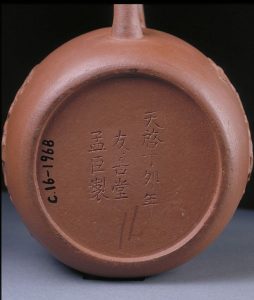
- Hui Meng Chen made Pots in Tianqi reign and one of the Zisha Pots he made is the High Lantern-shaped Zisha Pot found in the Victoria and Albert Museum dated the 7th Year of Tianqi reign which likely copied Shi DaBin Wanli 35th Year reign(1607) High Lantern-shaped Zisha Pot excavated from a grave in Shanxi province, China.(according to the Singaporean Zisha Hu scholar John Ng in his work called The Evolution of Shi DaBin’s High Lantern-shaped Zisha Hus).
- Zhou GaoQi, the Late Ming Zisha Hu historian, did not mention Hui Meng Chen’s works which implied Hui Meng Chen’s Late Ming Pots were not original and exceptional but mediocre like his Tianqi 7th Year reign Pot in the Victoria and Albert Museum showed.
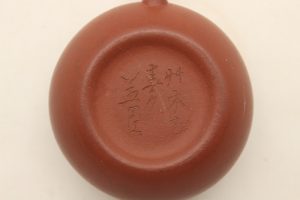
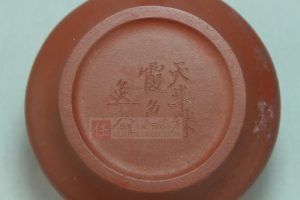
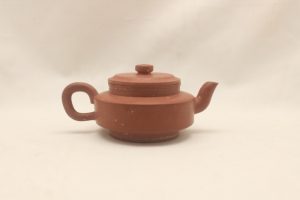
- In Shunzhi reign, after the death of Zhou GaoQi, Hui Meng Chen finally became his own man and invented his legendary Small Zhuni Pot like one of which is Ren Fu Collection’s Pot No:387.
- Hui Meng Chen’s Small Zhuni Pot like Ren Fu Collection’s Pot No:387 was a natural progression or development between Late Ming big Zisha Pots and the beginning Early Kangxi Gong Fu tea wares like the small Zhuni Pot and small teacups.
- Gong Fu Tea started in Early Kangxi and most Early Qing Gong Fu tea wares contained a Meng Chen Zhuni Pot as proven by Ren Fu Collection’s excavated Pots with archaeological records.
- Late Kangxi Meng Chen Zhuni Copies started to appear indicating, using the Time Lapse method which measured the time it took for a work to be famous and got copied, that Shunzhi was the time Hui Meng Chen’s famous Small Zhuni Pots were first made.
- Zhou Gao Qi died in 1646, the 2nd Year of Shunzhi’s reign, so roughly any Small Meng Chen Zhuni Pot made during the time between Zhou Gao Qi’s death and the first appearance of Meng Chen Zhuni Copies in Late Kangxi must be the legendary Hui Meng Chen Small Zhuni Hu or to be more precise, the legendary Hui Meng Chen Small Zhuni Hu must be made after Zhou Gao Qi’s book, “An Account of YangXian Teapots” and before the first Meng Chen Zhuni Copies appeared which means from Late Chongzhen to the first Meng Chen Zhuni Copies appeared.(so that is why in Ren Fu Collection’s book titled, “ Saving Old Purple -Sand Clay Teapots”, we purposely put the Niande of Pot No:387 as Shunzhi to Late Ming).
- Hui Yi Gong made Pots similar to Hui Meng Chen’s Pot like the High Lantern-shaped Zhuni Hus and Low Lantern-shaped Zhuni Pots in Late Kangxi and Yongzheng which means Hui Zhi Gong carried on with Hui Meng Chen’s tradition of making Small Zhuni Pots in a way that only a student and a son could have done, that was, to loyally and reverently follow Hui Meng Chen’s works. In fact, after Hui Yi Gong’s death, in Qian Long reign a lot of exact pair of Yi Gong and Meng Chen Zhuni Pots appeared indicating again their very likely father and son relationship.
- Commemoration Meng Chen Qian Long 8th Year Reign Zhuni Pots and Meng Chen Qian Long 13rd Year Reign Zhuni Pots were made.(as proven by excavated Zhuni Pots from Guangren’s graves/tombs)
There are much more archaeological information in Ren Fu Collection’s 2nd and 3rd One Thousand Pots which will be left to the next purveyor of the collection to decide what to do with them but for now we have more than sufficient archaeological proofs for a conclude our investigation of Hui Meng Chen’s Small Zhuni Pot and Gong Fu Tea.
惠孟臣发明小朱壶……………………………………
关注任富收藏之前发布的《惠孟臣小朱泥壶的发现》论文,这是对你的一个新知识的回顾,但没有关注的人请知道,因为这次考古发现不同于其他任何关于考古的发现。中国最伟大的茶文化叫做功夫茶。事实上,事实上几乎没有关于功夫茶文化历史的真正知识,除非它发生的时间,甚至是基于猜测而不是考古事实。是的,据说工夫茶起源于康熙初期,没有更多可以考证的历史。是的,任富收藏的考古发现和记录证明,工夫茶文化确实始于康熙初期。但是你们包括所谓的功夫茶专家,知道功夫茶文化是从什么时候开始的,为什么,如何,从哪里开始的吗?
我们不得不回忆一下惠孟臣发明小朱泥壶的故事,因为它是工夫茶文化创作中最重要的部分之一,而任富收藏有考古证据和大量他们来证明。对于中国来说,告诉世界中国人在 17 世纪后期发明了功夫茶,没有任何证据可以证实,例如作为真理硬通货的考古证据,这是毫无意义的。因此,既然所有考古证据都在我们手中,任富收藏会在我们寄给他们的书籍的基础上,将所有必要的考古资料和记录提供给包括外国学习机构在内的中国茶文化相关机构/组织。工夫茶与惠孟臣的小朱泥壶的18个故事,以及100个人有任富收藏的书《拯救老紫砂泥茶壶》,就是我们所说的“任富收藏对世界最大的礼物” 2022年是虎年”。
是的,女士们,先生们,我们又来了:发明小朱泥壶的故事,它彻底改变了饮茶和茶壶的制作,这是一个基于我们多年辛勤工作、血汗收集考古材料和我们对面临拆除的坟墓/墓葬的救援挖掘数据,以便为南阳的住宅和商业开发让路。
调查结果形式的故事基于有记录的历史和考古证据:
1)惠孟臣在天启年间制作了壶,他制作的紫砂壶之一是维多利亚和阿尔伯特博物馆发现的天启七年的高灯形紫砂壶,很可能是复制了时大彬款高灯形紫砂壶万历三十五年( 1607年)从中国山西省的一个坟墓中出土的。(根据新加坡紫砂壶学者John Ng在他的著作《时大彬的高灯形紫砂壶的演变》中)。
2) 晚明紫砂壶史学家周高起没有提及惠孟臣的作品,暗示惠孟臣的晚明壶并不像维多利亚和阿尔伯特博物馆的天启七年壶那样独具匠心,而是平庸。
3) 顺治年间,周高起死后,惠孟臣终于自立门户,发明了传说中的小朱泥壶,如任富收藏387号壶。
4)惠孟臣的小朱泥壶,如任富收藏第387号壶,是明末大紫砂壶与康熙早期工夫小壶、小茶杯等早期工夫茶具之间的自然发展或演变的象征。
5) 工夫茶始于康熙初年,据任富藏品出土的壶有考古记载,大部分清初工夫茶器都含有孟臣款朱泥壶。
6)康熙后期孟臣朱泥壶开始出现,用时间流逝法测量作品成名和被复制所用的时间,表明顺治是惠孟臣著名的小朱泥壶最早制作的时间。
7)周高起死于顺治二年(1646年),所以从周高起死到康熙末期孟臣朱泥壶首次出现之间,所造的小孟臣朱泥壶,大概就是传说中的孟臣。孟臣小朱泥壶,更准确地说,传说中的惠孟臣小朱泥壶,应该是在周高起的《阳羡茶壶系》之后,孟臣朱泥第一本出现之前,也就是崇祯晚期到初代孟臣朱泥壶出现。(所以在任富收藏的出版书《拯救老紫砂泥壶》中,特意将387号壶年代为明末顺治)。
8) 惠逸公在康熙晚期和雍正时期制作了类似惠孟臣的壶,如高灯型朱泥壶和低灯型朱泥壶,这意味着惠逸公继承了惠孟臣制作小准泥壶的传统。以一种只有学生和儿子才能做到的方式,那就是忠实地、虔诚地追随惠孟臣的作品。事实上,在惠逸公死后,乾隆年间出现了许多一模一样的惠逸公和惠孟臣朱泥壶,再次说明了他们极有可能的父子关系。
9) 制作纪念孟臣乾隆八年朱泥壶和孟臣乾隆十三年朱泥壶。(以达官贵人墓葬出土的朱泥壶为例)
任富收藏的第二、三千壶的考古资料要多得多,留给下一个藏品的提供者来决定如何处理,但现在我们有足够的考古证据来结束我们的调查。惠孟臣的小朱泥壶和功夫茶。
WHAT WAS SO SPECIAL ABOUT HUI MENG CHEN’S SMALL ZHUNI POT?…………………
A lot has been talk about Zhuni Pot and these are what they say:
The world of Yixing tea wares is full of myth, misconception, exaggeration, hype and the most forgeries in the art world. Of all the Yixing tea ware perhaps the most mysterious is Zhuni Pots.
What is Zhuni? The talk of “old Zhuni” versus “modern Zhuni” is in fact “Hongni” or a mixture of hongni and other Yixing clays are very confusing. According to the original definition of “Hongni” then Zhuni is a kind of Hongni. Hongni and Zhuni are simply two different kind of ores, with different mineral compositions. While Hongni is an argillaceous siltstone, a sedimentary rock formed with silt-sized particles, Zhuni is a mudstone which has been concreted within other sedimentary rocks with mud-sized particles(finer than silt). In fact the raw ores look quite different, though both become reddish when fired. While all Yixing ores shrink upon firing, the different composition of Hongni and Zhuni ores results in a significant difference in shrinkage: on average, Hongni shrinks around 15% of its unfixed size, whereas Zhuni shrinks between 17% and 25%. In addition to a fine particle size, this means that the fired Zhuni will be noticeably denser as well, heavier for its size and with a smoother surface in contrast to Hongni’s sandier surface. Some people even claimed Zhuni teapots have silky feel and Jade-like look.
Although there are many regions in China where ore deposits are found, Yixing is the only area with ore suitable for making teapots. Furthermore Purple-Sand ore is not found everywhere in Yixing. The strata the ore is mined from are only found several hundred meters below sea level. Such deep mining is dangerous and if it was not for the high demand for Zisha Teapots especially Zhuni Pots, mining would not have been worthwhile and Chinese tea culture would have developed along different lines.
Zhuni is the rarest clay and has the highest iron content and the lowest success rate after firing due to its highest shrinkage. Zhuni Pots, especially antique ones, are the most expensive and sought after by collectors and certain tea drinkers.
In the long history of tea drinking the design of tea wares constantly evolved to define the tea drinking experience. The quest for the highest quality tea and highest compatibility between tea and tea utensils can only be found in Gong Fu tea and the perfect Gong Fu tea is one made with a small Zhuni Pot(preferably MengChen) and drank in Roushen teacups just as the founding Gong Fu tea masters in Early Kangxi had in mind the criteria for a good Gong Fu tea.
According to tea art experts and Yixing potters, the test of a Potter’s skill lies in its functionality and beauty. The spout must pour without dribbling, the handle must have a good grip and must feel right in your hand, and above all, the lid must have a good fit. The art lies in achieving a harmonious equilibrium of all the requirements mentioned.
Now the time has come for us to test a real life excavated legendary Shunzhi Hui Meng Chen Small Zhuni Pot which is the only surviving one in the world with archaeological proofs,to demonstrate the Pot’s qualities. The following were observations that were taken down in the test.(see pictures of harmonious equilibrium of all the qualities of Pot No:387)
- The spout does not dribble when pouring tea.
- The handle provides a comfortable grip and feels right in the hand.
- The lid has a perfect fit.
- The spout, lid and handle are all in a straight line.
What’s more Pot No:387 has other qualities too like it has a jade- like complexion, tea leaves brewed in it gives the quickest, freshest, most aromatic, strongest flavor and the richest color mostly due to its high tea leaves to water ratio.(Pot capacity:100m/l). It’s small size means that the Pot is highly portable and it’s flat Lantern-shaped form means it’s very easily tucked away in the pocket or other forms of mobile storage. The Pot No:387’s stunning beauty is matched only by its stunning functionality. Pot No:387 was excavated and found to be on its own, with just a miniature funereal cauldron but without any teacup or Gong Fu tea wares indicating the owner probably drank directly from the Pot, a Pot he treasured so much because he could easily transport and even easily hide the Pot which resembles a ‘fat round purse’ in his/her coat or dress pocket in the troubling times of Shunzhi’s reign.
At this point we might ask: was the popularity or great fame of Hui Meng Chen’s Small Zhuni Hus due to only its functionality and aesthetic or could it be due too to the fashion trend at that time? Hui Meng Chen had successfully married aesthetics with functionality to such a extant that his Pots , whether the original or Copies, became a”must-have” or de rigueur in Gong Fu tea at that time, from Late Kangxi when Meng Chen Zhuni Copies started appearing, to its peak at Qian
One’s reign where Gong Fu tea wares with the small Meng Chen Zhuni Hus were mass-produced to even Daoguang’s Reign when the small Meng Chen Zhuni Pots were replaced by the small Meng Chen Santoh Zhuni Copies.
You can say Hui Meng Chen’s Small Zhuni Hu inspired Gong Fu Tea and Gong Fu Tea became famous and in turn propelled Hui Meng Chen’s Small Zhuni Pots into great fame-it was a kind of synergy. Or rather you can say Hui Meng Chen’s Small Zhuni Pot automatically reciprocated in the design and creation of the small Roushen teacups and together with the dish, burners and water boiler became known as Gong Fu Tea and not to mention that since there were no Gong Fu tea in Chongzhen and Shunzhi period, Hui Meng Chen’s Small Zhuni Pot also inspired another culture which was tea drinking directly from the small Zhuni Pot.
And if you are still not convinced that Hui Meng Chen’s Small Zhuni Pots were really legendary and the best, just look at the Meng Chen Qian Long 8th Year Reign or 13rd Year Reign Zhuni Pots that even the Emperor Qian Long gave His Imperial approval to these commemoration Pots which are found on no other Pots in the history of Zisha Hu.
In Ren Fu Collection’s exclusive exhibition for invited VIP guests, whenever the Covet-19 pandemic allows it to take place, we will show-case Pot No:387’s qualities and let the highly learned guests see, touch and hear the legendary Hui Meng Chen’s Small Zhuni Pot to prove and convince them of our discovery.
惠孟臣的小朱泥壶有什么特别之处?……………………
很多人都在谈论朱泥壶,他们是这么说的:
宜兴茶具的世界充满了神话、误解、夸张、炒作和艺术界最多的赝品。宜兴茶具中,最神秘的莫过于朱泥壶了。
什么是朱泥呢?说“老朱泥”与“现代朱泥”,其实是“红泥”或朱泥与宜兴其他泥土的混合,非常混乱。按照“红泥”的原定义,朱泥是红泥的一种。红泥和朱泥只是两种不同的矿石,具有不同的矿物成分。红泥是一种泥质粉砂岩,是一种由粉砂大小的颗粒形成的沉积岩,而竹泥是一种泥岩,它已经在其他沉积岩中以泥浆大小的颗粒(比粉砂细)凝结。事实上,原矿石看起来完全不同,尽管它们在烧制时都会变红。虽然所有宜兴矿石在烧制时都会收缩,但红泥和朱泥矿石成分的不同导致收缩率存在显着差异:平均而言,红泥的收缩率约为其未固定尺寸的 15%,而准泥则在 17% 至 25% 之间。除了细粒度之外,这意味着烧制的朱泥也会明显更致密,与红泥的砂质表面相比,它的尺寸更重,表面更光滑。甚至有人声称朱泥茶壶手感柔滑,外观如玉。
虽然中国有很多矿石,但宜兴是唯一一个有适合制作茶壶的矿石的地区。此外,紫砂矿在宜兴并非随处可见。开采矿石的地层仅在海平面以下数百米处被发现。如此深的开采是危险的,如果不是紫砂壶特别是朱泥壶的需求量很大,开采就不值得,中国茶文化也会沿着不同的方向发展。
朱泥是最稀有的粘土,含铁量最高,烧成后的成功率最低,因为它的收缩率最高。朱泥壶,尤其是古董壶,是最昂贵的,受到收藏家和某些饮茶者的追捧。
在悠久的饮茶历史中,茶具的设计不断演变,定义了饮茶体验。追求最高品质的茶,茶与茶具的最高兼容性,只能在工夫茶中找到,完美的工夫茶是用一个小朱泥壶(最好是孟臣壶)泡制的,并用若深茶杯喝。康熙初期的功夫茶大师心中有好功夫茶的标准。
据茶艺专家和宜兴陶艺家介绍,考验陶艺家的关键在于功能性和美观性。壶嘴必须倾倒时不会滴漏,手柄必须有良好的抓握力并且手感必须恰到好处,最重要的是,盖子必须贴合。艺术在于实现所有提到的要求的和谐平衡。
现在是时候测试一个真实的出土的传说中的清朝顺治时期惠孟臣朱泥壶了,这是世界上唯一一个有考古证据的幸存者,以展示壶的品质。以下是在测试中记录下来的观察结果。(参见 Pot No:387 所有品质的和谐平衡图片)
1) 倒茶时壶嘴不滴水。
2) 手柄提供舒适的抓握感,手感恰到好处。
3) 盖子完美贴合。
4) 壶嘴、盖子和把手都在一条直线上。
更重要的是,387号壶还有其他的特点,比如它有玉般的肤色,用它冲泡的茶叶最快、最新鲜、最芳香、最浓郁的味道和最丰富的颜色,主要是因为它的茶叶与水的比例很高。 (壶容量:100m/l)。它的小尺寸意味着壶非常便携,它的扁平灯笼形状意味着它很容易藏在口袋或其他形式的移动存储中。 Pot No:387 令人惊叹的美丽与其惊人的功能相匹配。 387号壶被挖掘出来,被发现是独立的,只有一个微型葬礼罐,但没有任何茶杯和功夫茶具,说明主人可能是直接从壶中饮用的,他非常珍贵的壶,因为他可以轻松运输甚至在顺治乱世之际,将“胖圆荷包”形状的壶藏在衣兜里。
说到这里,我们可能会问:惠孟臣的小朱泥壶之所以能走红,是因为它的功能性和美感,还是因为当时的流行趋势?惠孟臣成功地将美学与功能性结合到了这样的地步,以至于他的壶,无论是原件还是复制品,都成为了当时功夫茶的“必备”或必备品,从康熙末年孟臣朱泥副本开始出现,在乾隆达到顶峰。小孟臣朱泥壶与汕头小孟臣朱泥壶一起大量生产的功夫茶具到道光年间,小孟臣朱泥壶被汕头朱泥壶副本所取代。
可以看到,惠孟臣的小朱泥壶启发了功夫茶,功夫茶成名,又推动了惠孟臣的小朱泥壶声名鹊起——这是一种协同作用。或者可以说,惠孟臣的小朱泥壶在小肉身茶杯的设计和创作中自动回馈,连同盘子、炉子和开水器一起被称为工夫茶,更何况没有工夫崇祯和顺治时期的茶,惠孟臣的小朱泥壶也启发了另一种文化,即直接从小朱泥壶喝茶。
如果你还不相信惠孟臣的小朱泥壶真的是传说中的最好的,那就看看惠孟臣在乾隆八年或十三年的朱泥壶,连乾隆皇帝都给了他的皇室认可。紫砂壶历史上从未有过的纪念壶。
任富收藏特邀贵宾专展,只要Covet-19疫情允许,我们将展示387号壶的品质,让学识渊博的客人看到、触摸和听到传说中的惠孟臣小朱泥壶来证明和说服他们我们的发现。