Archaeological Proofs
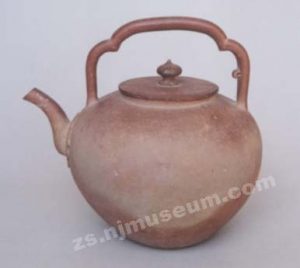
- Pot No: 387 was excavated from a Shunzhi grave(with no gravestone epitaph) which means the original owner died in Shunzhi, a Transition Period of Manchu rule where as a protest, all Han Chinese graves refused to write gravestone epitaph describing the Niande of Qing Emperor.
- This Hui Meng Chen Pot looks quite unused inside the Pot even though it was coated with earth and calciferous growths on the outside when excavated.
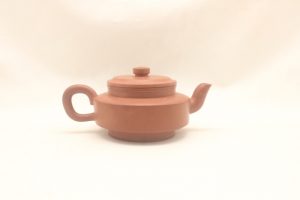
- Pot No:387 is the earliest of Hui Meng Chen’s revolutionary small Zhuni Hu ever to be excavated.( The Tianqi 7th Year Reign Hui Meng Chen Pot in the Victoria and Albert Museum is made of Zisha clay)
- Even though the Pot can be very Late Chongzhen, we believe with our vast experience and knowledge based on archaeological proofs and not guess works, that Pot No:387 is Shunzhi.
- The depth and nature of earth and style of burial was Late Ming Chongzhen.
- The Pot itself is a hybrid or transitional shape, size and style: with Late Ming lid and handle and small Early Qing body and spout.
- The earliest of Ren Fu Collection’s Meng Chen copies are Yongzheng/ Late Kangxi. We honestly do not think any of our Late Kangxi or Yongzheng Meng Chen Zhuni Pots are real Hui Meng Chen Pots even though some experts claim there are a few exquisite real Meng Chen Pots from these Ren Fu Collection’s Pots.
- The most Meng Chen copies are in Qian Long reign.
- Nearly 50% of all Pre-Daoguang Zisha Hus are Meng Chen copies.
- Out of all Pre-Daoguang Old Famous and Old Master Potters’ Zisha/Zhuni copies, about 90% are Old Meng Chen copies and the rest split between Hui YiGong, Chen Ming Yuan, SiTing, Shi Da Bin, Pan-Hu Old copies implying, based on such big disproportionate differences in fame and popularity between the Old Master Potters and Old Famous Potters, Hui Meng Chen must be the most popular, most worshipped and arguably the greatest Old Master Potter.
- More than 95% of Middle to Early Qing(Daoguang to Kangxi) Zisha Hus are Zhuni Hus.
- Zisha Pots in Daoguang and Jiaqing are almost all Zhuni Hus and almost all Meng Chen copies.
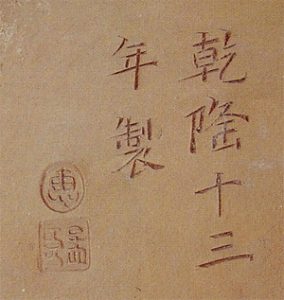
- Of all commemoration Pots, all are Meng Chen Zhuni Hus with Qian Long 8th and 13rd Year Reign chop marks.
- Santoh Zhuni Hus appeared in Yongzheng( and could be slightly earlier like in Late Kangxi).
- Most of the Pre-Daoguang Santoh Zhuni copies are Meng Chen copies implying Hui Meng Chen had an influence on Santoh Zhuni Hus too.
- The earliest Gong Fu tea set was excavated from an Early Kangxi grave belonging to the wife of a man, likely GuangRen, surname Zheng.
- Pot No:249 and its Gong Fu tea wares are the earliest Gong Fu tea set excavated supporting the popular claim or belief that Gong Fu Tea culture started around the 18th century.
- There were lots of unique pairs of Zhuni Pots with Meng Chen’s name and Yi Gong’s name excavated. These pairing of Zhuni Pots have one in Meng Chen’s name and another in Yi Gong’s name but with identical shape, size, style , inscriptions and even Niande like the Daoguang or Jiaqing or Late/Middle/Early Qian Long or Yongzheng Ball-shaped Zhuni Pots, Pear-shaped Zhuni Pots, Low Lantern-shaped Zhuni Pots, SiTing-shaped Zhuni Pots or Pan-Hu-shaped Zhuni Pots and This indicates a very close and special relationship between Hui Meng Chen and Hui Yi Gong which will be determined in our final conclusions.
- Most Fujian people seemed to collect Zhuni Pot in their Gong Fu tea set and most Guangdong people seemed to collect Santoh Zhuni Pot in their Gong Fu tea set going by excavated Gong Fu tea wares indicating that Gong Fu Tea culture most likely started in Fujian rather than Chao Zhou.
- And what is claimed by experts or tea historians that from the Middle Qing Dynasty tea drinking had become an indispensable part of the life of the Chao Zhou people can be proven by the rise of the Chao Zhou Zhuni Hu(or Santoh Zhuni Hus) as supported by Ren Fu Collection’s excavated Daoguang Santoh Zhuni Pots.
And lots more archaeological discoveries and data that are still being retrieved and compiled but are not ready and awaiting their turn to be sorted out.(in fact a lot of Ren Fu Collection’s archaeological discoveries are either out or a work-in-progress or awaiting discovery.
(惠孟臣故事的第五集)
考古证据:
1) 壶号:387是从清朝顺治时期的一个墓穴中发掘出来的(没有墓志铭),这意味着原主人死于顺治,这是满族统治的过渡时期,作为抗议,所有汉族墓穴拒绝写墓志铭描述清皇帝的年代。
2) 这把惠孟臣朱泥壶虽然出土时外表覆有泥土和钙质生长物,但在壶内却显得相当闲置。
3) 387号壶是迄今为止发掘出的最早的惠孟臣革命小朱泥壶(维多利亚阿尔伯特博物馆天启七年回惠孟臣壶是紫砂泥制)。
4) 尽管该壶可能是很晚明崇祯,但我们相信,凭借我们丰富的经验和知识,根据考古证据,而不是猜测作品,该壶编号:387是清朝顺治时期。
5) 土壤的深度、性质和埋葬方式是明末崇祯时期。
6) 壶本身是一个混合或过渡的形状,大小和风格:晚明盖子和处理和小清初身体和壶流口。
7) 任富收藏中最早的惠孟臣本是雍正/康熙晚期。诚然,我们并不认为清朝康熙末年或雍正朱泥壶是真正的惠孟陈壶,尽管一些专家声称,有一些精美的真正惠孟臣壶从这些任富收藏的壶。
8) “孟臣”款壶是老仿最多的是乾隆年间。
9) 道光以前的紫砂壶有近50%是孟臣的复制品。
10) 道光以前的老名家、老名家紫砂、朱泥,90%左右是老孟臣款壶,其余的分为惠逸公、陈鸣远、思亭、时大彬、潘壶等,因为老名家、老名家名气、人气相差太大,惠孟臣一定是最受欢迎的,最受崇拜,可以说是最伟大的老陶艺大师。
11) 清代中前期(道光至康熙)紫砂壶95%以上为朱泥壶。
12) 道光和嘉庆的紫砂壶几乎都是朱泥壶,几乎都是孟臣的仿制品。
13) 在所有的纪念壶中,都是带有乾隆八年和十三年印章的孟臣款朱泥壶。
14) 汕头朱泥壶出现在清朝雍正时期(可能比康熙晚期稍早)。
15) 道光前的汕头朱泥壶老仿多为孟臣款老仿,寓意惠孟臣款汕头朱泥壶也有影响。
16) 最早的功夫茶具出土于康熙早期的一座坟墓,属于一个男子的妻子,很可能是广仁,姓郑。
17) 249号壶及其工夫茶具是最早出土的工夫茶具,支持人们普遍认为工夫茶文化始于18世纪左右。
18) 出土了许多独特的一对朱泥壶,上面刻有孟臣和逸公的名字。这对朱泥壶有一个叫孟臣,一个叫逸公,但形状、大小、样式、铭文甚至年代都完全相同,如道光、嘉庆、乾隆中晚期、乾隆早期、雍正球型朱泥壶、梨型朱泥壶、矮灯笼型朱泥壶等,思亭形朱泥壶或潘形珠泥壶等。这说明惠孟臣和惠逸公之间有着非常密切和特殊的关系,这将在我们最后的结论中确定。
19) 从出土的工夫茶具看,福建人多在工夫茶具中收藏朱泥壶,广东人多在工夫茶具中收藏汕头朱泥壶,说明工夫茶文化最有可能起源于福建而不是潮州。
20) 而专家或茶史家所说的从清朝中期开始饮茶已经成为潮人生活中不可缺少的一部分,这一点可以从任富收藏的《道光汕头朱泥壶》所支持的潮州朱泥壶的兴起得到证明。
还有更多的考古发现和资料仍在检索和整理中,但还没有准备好,等待整理。(事实上,任富收藏的许多考古发现要么已经完成,要么正在进行中,要么等待发现。



Reverse Chronological Analysis
Reverse chronological analysis is like reverse engineering whereby for example a Country A does not know or have the technology of making for example an advanced fighter aircraft belonging to another Country B so Country A buys or steal or clandestinely acquires through a third country one of the advanced fighter jets belonging to Country B and opens it up to study and analyze the fighter plane and then copy its technology and finally Country A make a copy of the exact fighter aircraft just like the one belonging to Country B.
We use the same method but called it Reverse Chronological Analysis in studying and analyzing in reverse the “historical results” of the development of tea culture or Zisha Hu like for example Hui Meng Chen, the most mysterious Potter whom we know nothing about, if a lot of Pots in Daoguang reign are found to have Meng Chen’s name that means Hui Meng Chen must have been a very popular and very famous Potter a few hundred years earlier in his heydays.
Now we look at some of the things we know or hear passed down from history and those found in Ren Fu Collection’s archaeological discoveries.
- Hui Meng Chen made small Zhuni Pots
- Gong Fu tea is not Gong Fu tea without a Meng Chen Pot
- Hui Meng Chen is the most popular and famous Potter in Zisha Hu history
- It is believed that Gong Fu tea started sometime around the 18th century, that is, Early Kangxi.
- The bulk of all Ren Fu Collection’s Gong Fu tea sets contain a small Meng Chen Zhuni Pot which archaeologically prove that, in reverse, the Ren Fu Collection Shunzhi small Hui Ming Chen Zhuni Pot must have an important connection possibly underlining the fact that Hui Meng Chen’s creation also sparked off a tea revolution called Gong Fu tea?
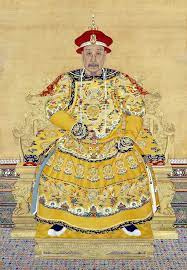
- There are archaeologically excavated Zhuni Hus with Meng Chen’s name and Emperor Qian Long’s reign years, that is, the 8th and 13rd Qian Long’s reign years. No other Old Potters in history have such privilege or to be allowed to use the Emperor Qian Long’s name and Reign Year without Palace approval.In reverse you can imagined how important and influential Hui Meng Chen was to be the only Potter to be allowed such privilege not to mention the fact that it also provided archaeological proofs that Zhuni Hus were made in Jingdezhen where the Palace must have an oversight in the production of such high quality Pots such as Zhuni Hus are and also the Emperor reign year chop-marks and inscriptions are similar to the Early Qing Blue and White ceramics with Qing Emperor reign year, chop-marks and inscriptions which could only further mean they were made in Jingdezhen.
- Why did the famous Late Ming Zisha Hu historian Zhou GaoQi who wrote a book titled, “ An Account of YangXian Teapots” not mentioned Hui Meng Chen at all? The answer is simple that the Pots like the Zisha Pot in the Victoria and Albert Museum, London that Hui Meng Chen made did not impress Zhou GaoQi at all and the Zisha Hu historian did not lived to see the revolutionary small Zhuni Pots that Hui Meng Chen made in Shunzhi like Ren Fu Collection’s Pot No:387.
- Why 50% of all Ren Fu Collection’s excavated Pre-Daoguang Zisha Hus are Meng Chen copies and almost all are Zhuni Hus? It could only mean Hui Meng Chen’s revolutionary small Zhuni Pot created a revolution.
- Why is 90% of all Pre-Daoguang Zisha copies, Meng Chen Zhuni copies and the rest(10% of all Pre-Daoguang Zisha Copies) Hui Yi Gong, Chen Ming Yuan, Shi Da Bin, SiTing and Pan-Hu Copies? This one archaeological proof shows the colossal fame and popularity of Hui Meng Chen that no other Old Master or Old Famous Potters could compare.
- Why does most Pre-Daoguang Gong Fu tea set, especially in Early Qing, contained Meng Chen Zhuni Hu?
- Why does most Pre-Daoguang Gong Fu tea set, especially in Daoguang and Jiaqing contained Meng Chen Santoh Zhuni copies?
- Why are there lots of pairs of Pre-Daoguang Meng Chen and Yi Gong Zhuni Hus with similar size, shape, style, inscriptions and even Niandes especially after Hui Meng Chen’s and Hui Yi Gong’s death? This can mean that Hui YiGong was very close to Hui Meng Chen maybe as close as father and son relationship?
- The Ren Fu Collection small Zhuni Pot No:387 that Hui Meng Chen made in Shunzhi was a sophisticated, advance and complete Zhuni Pot even so today as it was in Shunzhi’s reign making it a final, complete and matured Works of Art(possibly classified as Fine Arts too) and the evolution of the Zisha Hu was completed in Shunzhi when Hui Meng Chen invented the small Zhuni Pot.
There are a lot more discoveries that are awaiting retrieval and sorting out to be made into stories but for now these are what we got for you and we think they are more than sufficient.
逆时间分析
反方向时间分析类似于逆向工程,例如,A国不知道或拥有制造例如属于另一个国家B的先进战斗机的技术,因此A国购买、窃取或秘密通过第三国购买或窃取或秘密购买属于B国的先进战斗机之一,以及打开它来研究和分析战斗机,然后复制它的技术,最后A国制造一个精确的战斗机的副本,就像属于B国的飞机。
我们用同样的方法,但在研究和分析茶文化发展的“历史成果”或紫砂壶的“历史成果”时,我们称之为逆向时间分析,例如我们所知最神秘的陶艺家惠孟臣,如果发现道光年间的很多壶都有孟臣的名字,那就意味着惠孟臣在几百年前的鼎盛时期一定是一个非常受欢迎和非常有名的陶艺家。
现在我们来看看我们所知道的或听到的一些历史传承下来的东西,以及任富收藏的考古发现中发现的东西。
1) 惠孟臣做小朱泥壶
2) 功夫茶不能没有孟臣壶的功夫茶
3) 惠孟臣是紫砂壶历史上最受欢迎、最著名的陶艺家
4) 据信,功夫茶始于18世纪左右,即康熙早期。
5) 任富收藏的所有功夫茶具中,大部分都有一个小孟臣朱泥壶,考古证明,相反,任富收藏的惠孟臣小朱泥壶是清顺治时期,一定有重要联系可能会凸显惠孟臣的创作也引发了一场名为“功夫茶”的茶革命?
6) 考古发掘出了孟臣的名字和乾隆皇帝的统治年,即乾隆八、十三年的诸朱泥壶。历史上没有其他老陶艺家有这样的特权,也没有皇室批准,也不允许使用乾隆皇帝的名字和在位年份,相反,你可以想象,惠孟臣是唯一一个被允许这样特权的陶艺家,而他也提供了考古证据,证明朱尼壶是景德镇制造的,故宫必须监督生产朱泥壶上等优质壶,皇帝年号刻印和铭文与清初青花瓷、清皇帝年的刻划、碑文相似,刻印和铭文,只能进一步说明它们是景德镇制造的。
7) 明末著名的紫砂壶历史学家周高起为何写了一本题为《阳羡茶壶史》的书,根本没有提到惠孟臣?答案很简单,惠孟臣在伦敦维多利亚和阿尔伯特博物馆的紫砂壶这样的壶根本没有给周高起留下深刻印象,紫砂壶史学家也没有活到看到惠孟臣像任富收藏的壶号387一样,在清朝顺治时期做的革命小朱泥壶。
8) 为什么任富收藏中50%的出土前道光紫砂壶都是孟臣的老仿品,几乎都是朱泥壶?这只能意味着惠孟臣革命的小朱泥壶创造了一场革命。
9) 为什么所有道光以前的紫砂壶的是惠孟臣的副本和其余(道光紫砂前的10%)惠逸公、陈鸣 远、时大彬、思亭、潘壶的比例都是90%?这一考古证明,惠孟臣的巨大名望和人气,是其他老主人和老著名陶艺家无法比拟的。
10) 为什么道光前的功夫茶具,特别是清初,都含有惠孟臣?
11) 为什么道光前的功夫茶具,特别是道光和嘉庆时期的茶具都有孟臣汕头朱泥壶的副本?
12) 为什么在惠孟臣和惠逸公死后,还有很多大小、形状、风格、铭文甚至年代都相似的清朝道光以前孟臣款和惠逸公款朱泥壶呢?这能不能说明惠逸公和惠孟臣关系很近,或许就像父子关系?
13) 惠孟臣在清朝顺治时期制作的任富收藏小朱泥壶号387,是一把精巧、先进、成熟完整的朱泥壶,即使在今天,清顺治年间,也是如此,使之成为最后一个,完整成熟的艺术作品(可能也可以归类为美术),紫砂壶的演变在顺治完成,当时惠孟臣发明了小朱泥壶。
还有很多发现等待检索和整理,以便编成故事,但现在这些都是我们为您所得到的,我们认为它们已经足够了。