.jpg)
Chronological Chart
The chronological chart below which are based on official sources and archaeological proofs gives you a quick look at the life of Hui Meng Chen superimposed on a brief time-line of selected tea and Zisha Hu history from the Ming Dynasty to the Middle Qing Dynasty(Daoguang) and the historical events directly or indirectly inspired or influenced by Hui Meng Chen’s revolutionary small Zhuni Hu. We also used them to illustrate the beginning of Hui Meng Chen’s great fame during his life and beyond his death to expedite learning with emphasis on the rise or Golden Age of Zisha Hu, the rise or Golden Age of Zhuni Hu, the rise or Golden Age of Gong Fu Tea, the rise of Santoh Zhuni Hu.
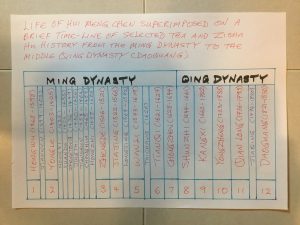
- Emperor Hongwu(1368-1398) abolished the tribute Chien-an caked tea from Fujian province in 1391 and later decreed tea leaves be used instead of caked tea.
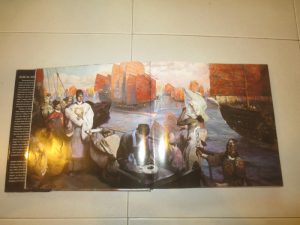
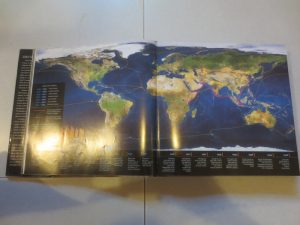
- Yongle reign(1403-1425) saw Zheng He creating the Maritime Silk Route which helped the spread of tea around the world
- Zhengde reign(1506-1521) witnessed the monks of Jinshe temple making the first Zisha teapots and later Gong Chun made the Zisha Pots into an art form.
- Jiajing reign(1522-1566) witnessed eunuch Wu Jing’s death on the Twelve Year Reign of Jiajing(1533) and his Zisha Pot which is the earliest Zisha Pot archaeologically excavated.
- Wanli reign(1573-1619): in the Middle-Late Wanli(>1600) Hui Meng Chen was born and in Wanli Ding Wei Year(1607) Shi DaBin made his High Lantern-shaped Zisha Pot.
- Tianqi reign(1621-1627) saw Hui Meng Chen make his High Lantern-shaped Zisha Pot which is collected and exhibited in the Victoria and Albert Museum, London.
- Chongzhen reign(1628-1644) witnessed Zhou GaoQi, the famous Zisha Hu historian wrote the book, “An Account of YangXian Teapots”, which did not mention Hui Meng Chen.
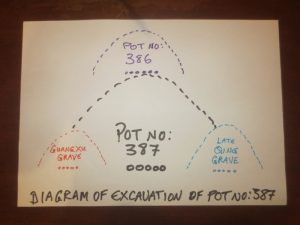
- Shunzhi reign(1644-1661) Hui Meng Chen made his revolutionary Small Zhuni Pots one of which is the Ren Fu CollectionPot No:387.
- Kangxi reign(1662-1722): In Early Kangxi Gong Fu Tea culture started and Hui Meng Chen fathered a son named Hui Yi Gong and died in Early Kangxi.
- Yongzheng reign(1723-1735):Santoh Zhuni Hu started.
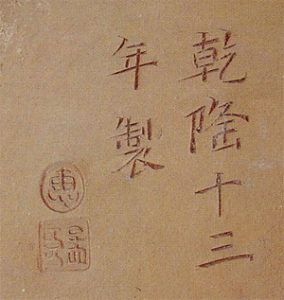
- Qian Long reign(1736-1795) saw the Golden Age of Gong Fu Tea and Zhuni Hu marked by Commemoration Meng Chen Zhuni Pots in the 8th and 13rd Year of Qian Long’s reign. Qian Long reign also witnessed the peak of Chinoiserie craze in Europe and The American War of Independence(the 19th of April, 1775 to the 3rd of September, 1783) due to tea.
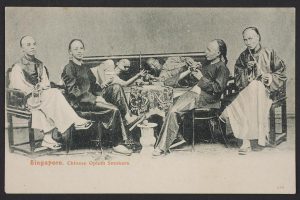
- Daoguang reign(1821-1850) witnessed the rise of Santoh Zhuni Hu and the Opium Wars (4th September 1839 to 29th August, 1842 and 28th June, 1856 to 18th October, 1860) because of tea.
(惠孟臣故事的第六集)
年表
下面的年表以官方资料和考古证据为基础,让你快速了解一下惠孟臣的生平,这些是惠孟臣的生平叠加在从明朝到清朝中期(道光)的精选茶叶和紫砂壶历史的简短时间线上,以及受惠孟臣的革命家小朱泥壶直接或间接受其启发或影响的历史事件。我们还用它们来说明惠孟臣生前和死后的成名之初,以加速学习,重点是紫砂壶的兴起或黄金时代、朱泥壶的兴起或黄金时代、工夫茶的兴起或黄金时代、朱泥汕头壶的兴起。
1) 明朝洪武皇帝(1368-1398)1391年废除了福建省的贡品——建安茶,后来又颁布法令用茶叶代 替饼茶。
2) 永乐年间(1403-1425)郑和开创了海上丝绸之路,促进了茶在世界各地的传播。
3) 正德年间(1506-1521)见证了金沙寺僧侣们制作了第一个紫砂茶壶,后来龚春将紫砂壶制作成一种艺术形式。
4) 嘉靖年间(1522-1566)见证了太监吴经在嘉靖十二年(1533)的逝世,以及最早考古发掘的紫砂壶。
5) 万历年间(1573-1619):万历中后期(1600)惠孟臣出生,在万历丁未年间(1607)时大彬制作了高灯笼形紫砂壶。
6) 天启年间(1621-1627)看到惠孟臣在伦敦维多利亚和阿尔伯特博物馆收藏展出的高灯笼形紫砂壶。
7) 崇祯年间(1628-1644)见证了著名紫砂壶史家周高起写的《阳羡茶壶记》一书,没有提到惠孟臣。
8)清朝 顺治年间(1644-1661)惠孟臣将其革命的小朱泥壶做成了其中一个,即任富收藏壶号:387。
9) 康熙年间(1662-1722):康熙早期的功夫茶文化开始,惠孟臣生下一个儿子惠逸公,早年去世。
10) 雍正年间(1723-1735):汕头朱泥壶制作开始。
11) 乾隆年间(1736-1795)是乾隆八、十三年以纪念孟臣朱泥壶为标志的功夫茶、朱泥壶黄金时代。乾隆时期也见证了欧美独立战争(1775年4月19日至1783年9月3日)中国主义热潮的高峰。
12) 道光年间(1821-1850)见证了汕头朱泥壶的兴起和鸦片战争(1839年9月4日至18月29日、1842年6月28日、1856年10月18日)因茶而兴起。
Something about Hui Meng Chen, Jingdezhen and Emperor Qian Long
Jingdezhen may have produced porcelain as early as the sixth century C.E. though it is named after the reign name of Emperor Zhenzong, in whose reign it became a major kiln site, around 1004. By the 14th century it had become the largest centre of production of Chinese porcelain, which it has remained, increasing its dominance in subsequent centuries. For several centuries, almost all top quality Chinese porcelain has come from the town which is in Jiangxi, Southern China. From the Ming period onwards, official kilns in Jingdezhen were controlled by the Emperor, making “imperial porcelain” in large quantity for the court and the Emperor to give as gifts especially during the Yongle’s reign where Zheng He brought back from his maritime Silk Route voyages, foreign dignitaries and friendly foreign Rulers of Foreign Lands who came to pay homage to Emperor Yongle and also to send abroad as diplomatic gifts( some might also have been sold especially for export and sometimes antique pieces in the Imperial Collection were sent to Jingdezhen to be copied)
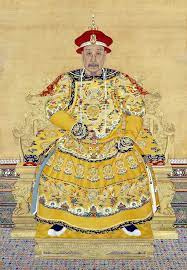
During the Qing Dynasty while Imperial taste in decoration remained somewhat conservative, the technical quality of Kangxi Imperial wares reached new heights of innovations at Jingdezhen. The long reign of the Qian Long Emperor(1736-1795) saw continuation of the technical perfection, but aesthetic stagnation. The Emperor Qian Long was a keen art collector and personally directed the trends in this period for imitating shapes from ancient metalware(like Xia/Shang/Zhou Bronzes) in porcelain, as well as imitations of wood and other material. The copying of famous wares from the distant past continued, alongside new styles.(After Qian Long reign, quality declined until the Taiping Rebellion in the 1850s where all the official kilns were destroyed).
We believe and we have ample archaeological evidences that Emperor Qian Long who not only had great filial piety towards his grandfather Emperor Kangxi, but who was also a keen art collector who was very respectful of past artistic achievements and is known to personally direct art trend and among others, none more than the ground-breaking, trendsetting and universally popular and which inspired the ubiquitous Gong Fu Tea culture at that time : the revolutionary Shunzhi Hui Meng Chen small Zhuni Pot. Qian Long emperor, a known lover of tea as well as art, could not have missed or been unaware of such seismic events as the revolution created by Hui Meng Chen small Zhuni Pots, not just in teapot but in tea culture where in Qian Long’s peaceful and very prosperous rule, in addition to His caring and benevolence towards His subjects, tea drinking became an egalitarian, popular pursuits combined with the best of tea wares as witnessed in the Gong Fu Tea culture all made possible because of Hui Meng Chen’s creation of the revolutionary small Zhuni Hu in Shunzhi’s reign.( we have archaeological proofs which show that 50% of all excavated Pre-Daoguang Zisha are Meng Chen Zhuni Copies and all have Gong Fu Tea set of tea wares). In fact Emperor Qian Long went further than that, His Royal Highness decreed that commemoration Meng Chen Zhuni Pots be made with Qian Long emperor’s reign year.( so far a considerable number of Meng Chen Qian Long 8th Year Reign Zhuni Pots were excavated and all belonged to Guangren or their wives). Emperor Qian Long is known to love collecting archaic Chinese Bronzes and had a big imperial collection and as a matter of study and research, all Ren Fu Collection’s excavated Meng Chen Qian Long 8th Year Reign Zhuni Pots are Gu-shaped or copied from the archaic Chinese Bronzes and the Gu is an archaic Chinese Bronze wine vessel. All these only indicate that Qian Long emperor must have an involvement in the production of the Meng Chen Qian Long 8th Year Reign Zhuni Hus which were likely commemoration Pots to be given as gifts by the Emperor.
关于惠孟臣、景德镇、乾隆皇帝的事…….
景德镇可能早在公元前六世纪就生产瓷器,虽然它是以宋朝真宗皇帝的名字命名的,在其统治时期,大约1004年成为一个主要的窑址。到14世纪,它已经成为中国瓷器最大的生产中心,至今仍在这里,在随后的几个世纪里,它的统治地位在不断增强。几个世纪以来,几乎所有的中国瓷器都来自中国南方江西的小镇。从明朝开始,景德镇官窑由皇帝控制,为宫廷和皇帝制作了大量的“皇瓷”,特别是在明朝永乐年间,郑和从海上丝绸之路航行中带回的时候,前来拜拜永乐皇帝、也以外交礼物形式出国的外国政要、友爱的外国统治者(有些可能也特别是为了出口而出售,有时皇室收藏的古董件被送到景德镇抄袭)
清代,康熙皇室的装饰品位虽然有些保守,但康熙御用的工艺品质在景德镇却达到了新的创新高度。乾隆皇帝(1736-1795)的长期统治,技术的完善延续,但审美停滞。乾隆皇帝是一位热衷于艺术收藏家,他亲自指导了这一时期的趋势,即仿制古代瓷器(如夏商周青铜器)的造型,以及仿造木材等材料。仿制远古名品,伴随着新的风格(乾隆统治后,质量下降,直到1850年代太平天国起义,所有官窑都被摧毁)。
我们相信,我们有充分的考古证据表明,乾隆皇帝不仅对祖父康熙皇帝有着极大的孝顺,而且是一位热心的艺术收藏家,对过去的艺术成就非常尊重,以亲自指导艺术潮流等著称,无非是破土之作,风尚通俗,激发了当时无处不在的工夫茶文化:莫过于革命性清顺治时期惠孟臣小朱泥壶的发明。众所周知乾隆皇帝是一位茶与艺术爱好者,除了关心臣民、仁爱臣民外,不可能错过或不知道惠孟臣小朱壶所创造的革命等“地震事件“,不仅在茶壶里,也不可能不知道在乾隆和平非常繁荣的统治下的茶文化中,喝茶成了一个平等主义者,民间追求与工夫茶文化中所见证的最好的茶具相结合,都是因为惠孟臣在清顺治时期创造了革命性的小朱泥壶(我们有考古证据,证明道光前制作的50%是孟晨朱泥,都有工夫茶一套茶具)。其实清乾隆皇帝走得更远,殿下下令用乾隆皇帝年来纪念惠孟臣朱泥壶。(至今,发掘出相当数量的“乾隆八年惠孟臣制朱泥壶 ”,全部属于官人或其妻子)。众所周知,乾隆皇帝喜爱收藏中国古代青铜器,并拥有大量的皇家收藏品,作为研究和学习的事情,任富收藏出土的“乾隆八年惠孟臣制朱泥壶”都是古代青铜器形状或仿制的青铜器和鼓是一种古老的中国青铜酒器。这一切只能说明乾隆皇帝肯定参与了乾隆八年惠孟臣朱泥壶的制作,这很可能是皇帝赠送的纪念壶。
-300x225.jpg)
-300x225.jpg)

CONCLUSIONS
There are two versions( based on guess works and not archaeological proofs) about Hui Meng Chen’s life. The first is that Hui Meng Chen lived during the Wanli to Chongzhen period of
Ming Dynasty. The second guess is that Hui Meng Chen lived during the Kangxi to Yongzheng period,
The Tianqi 7th Year Reign Hui Meng Chen High Lantern-shaped Zisha Hu in the Victoria and Albert Museum, London and the Ren Fu Collection’s Shunzhi Pot No:387 prove the second guess is totally wrong and the first guess that Hui Meng Chen lived during the Wanli to Chongzhen period is partly correct.
Here is our conclusions based on Ren Fu Collection’s archaeological material, records, discoveries and excavated cultural relics and we dare say our conclusions based on such massive treasure trove of archaeological material and data, we are very confident they are as truthful as archaeologically, scientifically and mathematically possible.
Hui Meng Chen was born in the Middle-Late Wanli Reign(1600). He made his early Zisha Pots in his twenties like the Tianqi 7th Year Reign Zisha Hu( see Victoria and Albert Museum Hui Meng Chen High Lantern-shaped Zisha Pot) which was modeled on Shi DaBin’s High Lantern-shaped Zisha Hu( made in the Ding Wei Year of Wanli’s Reign-1607). The famous Late Ming Zisha Hu historian Zhou GaoQi who died in 1646(Shunzhi 2nd Year Reign) did not notice anything special or outstanding about Hui Meng Chen’s work that would impressed him to include Hui Meng Chen’s name in his book, “An Account of YangXian Teapots”.(YangXian is an old name for Yixing).
Aware of great Potters before him like Shi DaBin and not happy with being a second rate Potter, Hui Meng Chen in Shunzhi Reign saw the superior potential in Zhuni Clay which was plentiful at that time and one of the reasons why no Potters attempted to capitalize on Zhuni’s potential is because every Potter was making big Zisha Pots since Zhuni clay can only be made into small Pots, and so Hui Meng Chen finally made the revolutionary small Zhuni Hus. Call Hui Meng Chen a late achiever or second time lucky if you like, he made his great creation when he was likely in his forties and fifties during Shunzhi’s reign and also very likely in his sixties,and in his late fatherhood, sired or fathered a son named Hui YiGong.( The Hui Meng Chen-Hui YiGong “father and son” link is more likely but the possibility of the grandfather-son relationship is less likely even though possible because do not forget Confucius was conceived when his father was 73 years old). This in turn explains very nicely and perfectly the chronology of Hui YiGong’s life who was born in Early Kangxi, did Potting in Late Kangxi and Yongzheng( it fixes in perfectly like a jigsaw puzzle). And to support that, Ren Fu Collection has awesome archaeological proofs that no one has in this world except Ren Fu Collection: Ren Fu Collection had excavated a lot of very unique pairs of Pots with Meng Chen and Yi Gong’s name. These pairings of Zhuni Pots have one in Meng Chen’s name and another in Yi Gong’s name but with identical shape, size, style, inscriptions and even Niande like the Daoguang or Jiaqing or Late/Middle/Early Qian Long or Yongzheng Ball-shaped Zhuni Pots, Pear-shaped Zhuni Pots, Low Lantern-shaped Zhuni Pots, SiTing-shaped Zhuni Pots or Pan-Hu-shaped Zhuni Pots and more.
Yes, we know you are going to say they are father and son and yes, we say the same and more- that we are all very lucky to see the day where one of the greatest puzzle in the history of Zisha Hu is solved with the help of the greatest feat now known to the Zisha Hu world which is the thousands of excavations performed by Ren Fu Collection which are like a giant trawler net catching every precious tell-tale stories captured in these capsules of history found and protected in these thousands of excavated tombs and graves. And before you feel in awe of Ren Fu Collection and very excited, there are more.
In fact there are bigger things happening in history than just discovering Hui Yi Gong is the son of Hui Meng Chen.
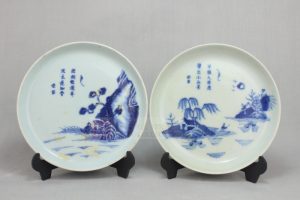
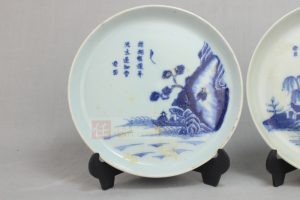
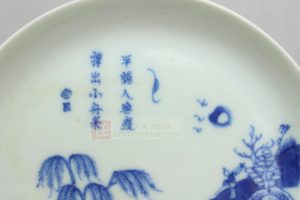
After Hui Meng Chen created his revolutionary small Zhuni Hus, one of which is like the Ren Fu Collection’s Pot No:387, the great Gong Fu Tea culture was slowly emerging and rising together with the rise of Zhuni Hu and later even the rise of Santoh Zhuni Hu. Gong Fu tea inspired and included exquisite set of tea wares like Rouchen teacups, Blue and White/GeYao/Ruyao dishes, burners with chop-marks and poetic inscriptions and water boilers. These wonderful exquisite Gong Fu tea set or tea wares especially the Zhuni teapot soon attracted the attention of the West and Japan ( not to mention many parts of the world where research and study ignored and never covered) resulting in the Chinoiserie craze in Europe that peaked in Qian Long’s reign( according to recorded European sources). So historical events backed by Ren Fu Collection’s archaeological material and records prove that Hui Meng Chen made his revolutionary small Zhuni Pots in the Transition Period of Shunzhi Reign which was the beginning of Hui Meng Chen’s fame and his fame only peaked much later after his death in Qian Long’s reign which saw Commemoration Meng Chen Zhuni Pots made with Qian Long reign marks and Gong Fu Tea at its best with the Zhuni teapot at its centre but unfortunately Zhuni Hu was later replaced by Santoh Zhuni Hu as the latter was a much cheaper tea utensil when the prosperous, peaceful and egalitarian Qian Long era degenerated into the chaotic and severe economic decline of the Daoguang period caused by invading Foreign Powers culminating in the Opium Wars.
结论
关于惠孟臣的生平,有两种版本(基于猜测作品而非考古证据)。第一是惠孟臣生活在明朝万历至崇祯年间。第二个猜测是,惠孟臣生活在清朝康熙至雍正时期,
明朝末年天启七年在位的伦敦维多利亚阿尔伯特博物馆惠孟臣高灯笼形紫砂壶和任富收藏清顺治壶号387证明第二猜测完全错误,第一个猜测惠孟臣在明万历至崇祯时期生活的说法是部分正确的。
以下是我们根据任富收藏的考古资料、记录、发现和发掘文物得出的结论,我们敢说,我们的结论基于如此庞大的考古材料和数据宝库,我们非常相信,他们在考古、科学和数学上都尽可能真实。
惠孟臣生于明万历中后期(1600)。他二十岁时就制作了早期的紫砂壶,如天启七年紫砂壶(见维多利亚和阿尔伯特博物馆惠孟臣高灯笼形紫砂壶),仿照了时大彬的高灯笼形紫砂壶(万历丁未年-1607年)。著名的明末紫砂壶历史学家周高起于1646年(顺治二年)去世,他对惠孟臣的作品没有任何特别或突出之处,这会给他留下深刻印象,将惠孟臣的名字列入他的著作《阳羡茗壶录》(阳羡是宜兴的老名字)。
他知道以前的陶艺大师,像时大彬,不喜欢当二等陶工,清朝顺治时期惠孟臣在当时的朱泥中看到了优越的潜力,而没有陶艺家试图利用朱泥的潜力的原因之一,因为每个陶工都在制作大紫砂壶,因为朱泥只能做成小壶,于是,惠孟臣终于做出了革命的小朱朱泥壶。如果你愿意,叫惠孟臣是个后进的人,或者说是第二次幸运,他在清初顺治统治时期,很可能是四十、五十岁,也很可能在六十年代,在他晚年的父亲时代,创造了自己的伟大的创作,亲生一个儿子名叫惠逸公(惠孟臣和惠逸公是“父子”的联系更可能,但即使可能,也不太可能发生祖父与儿子的关系,因为不忘孔子是在他父亲73岁时怀的)。这反过来又很好地解释了惠逸公出生于康熙早期、康熙晚期和雍正时期(它完全像拼图的图案)的生活年代。而为了支持这一点,任富收藏有着令人敬畏的考古证据,除了任富收藏外,世界上没有人拥有:任富收藏发掘了很多非常独特的功夫茶具,有孟臣壶、逸公壶。这些朱泥壶的姓名,有孟臣的名字,一对以逸公的名字,但形状、大小、样式、铭文甚至像道光、嘉庆或晚、中、早、雍正球状的朱泥壶、梨形的朱泥壶、扁灯笼形的朱泥壶等,形状、大小、风格、铭文甚至是年代都是一样的,君德形状、思亭形状朱泥壶或潘壶形朱泥壶等。
是的,我们知道你会说他们是父子,是的,我们说同样的话,而且更多——我们都很幸运地看到紫砂壶历史上最大的谜题之一被解决的那一天,紫砂壶世界现在已知的最伟大壮举的帮助是任富收藏进行的数千次挖掘,它们就像一个巨大的拖网渔网,捕捉在这数千个历史胶囊中发现和保护的每一个珍贵的故事。挖掘出来的宝藏之前你对任富收藏感到敬畏和兴奋,还有更多。
事实上,历史上还有比发现惠逸公是惠孟臣的儿子更重要的事情。
在惠孟臣创作了他的革命小品朱泥壶,其中一种就应该是任富收藏的壶号:387,随着朱泥壶的兴起,后来甚至是汕头朱泥壶的兴起,伟大的工夫茶文化也在慢慢兴起和流行。工夫茶的灵感来源于一套精美的茶具,如若深茶杯、蓝白/哥窑/乳窑盘、刻有印章和诗意题词的炉灶以及水壶。这些精美绝伦的工夫茶具或茶具,特别是朱泥茶壶,很快就引起了西方和日本的注意(更不用说世界上许多地方的研究和研究被忽视,从未覆盖),导致了欧洲的中国风热潮,在乾隆统治时期达到了顶峰(据欧洲文献记载)来源)。因此,以任富收藏的考古资料和记载为依据的历史事件证明,惠孟臣是在清朝顺治时期过渡制作革命小朱泥壶的,顺治过渡时期是惠孟臣成名的开始,而他的成名则是在乾隆死后的很长一段时间内才达到顶峰的,这一时期有纪念意义用乾隆时期的标记和功夫茶制作的孟臣朱泥壶,最好是以朱泥壶为中心,但不幸的是,朱泥壶后来被汕头朱泥壶取代,因为汕头朱泥壶在兴盛时期是一种便宜得多的茶具,和平平等的乾隆时代退化为道光时期的混乱和严重的经济衰退所造成的侵略外国列强在鸦片战争达到高潮。
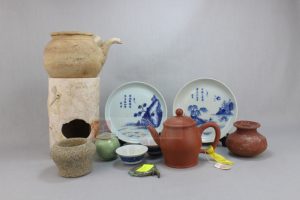
Lastly but not the least, like we warned before that there will be lots more questions raised as we answered and solved some mysteries or puzzles like for example could Hui Meng Chen’s creation of the revolutionary Zhuni Hu shifted the power base of the production of Yixing teapots from Yixing to Jingdezhen where the Palace had total control and oversight which we personally think so because Ren Fu Collection’s excavated Meng Chen Zhuni Hus with Qian Long reign years(8th and 13rd) the chop-marks and inscriptions are found exclusively on Jingdezhen-produced Blue and White ceramics(see picture of Pot No:149 and set of Gong Fu tea wares).The excavations at YangJiao Mountains produced no Zhuni Hus and until now none is found which goes to prove our story is correct and truthful and that is, Zhuni Hus were made in Jingdezhen and not Yixing. This and many, many more stories that are waiting to be discovered and solved will take time and time is what Ren Fu Collection has to save Old Zisha Hu especially discovering the truths about Old Zisha and protecting them from the Fake Pots and Fake Stories of organized fraudsters.
By the way before we terminate the big posting, which is like a small book about Hui Meng Chen, someone said this, “Intelligent people just only need to ask one simple question to know when Hui Meng Chen live”:
The question is we all know the mysterious Old Master Potter Hui Meng Chen was the most famous and most popular Old Famous Potter and he made Pots in Late Ming so why did the famous Late Ming Zisha Hu historian Zhou GaoQi not mention his name in his book, “An Account of YangXian Teapots”? (There are many ancient names of Yixing: Jingyi; Jiangxi; YangXian and only in the Song Dynasty it is called Yixing)
We know you clever people are going to say the answer to the simple question is because Hui Meng Chen’s Late Ming Pots did not impress Zhou GaoQi and Hui Meng Chen new and famous trend-setting small Zhuni Pots only came out after Zhou GaoQi’s death(1646).
Enjoy Ren Fu Collection’s historical “ One Belt, One Road” archaeological posting.
P/s…..
Some business friends said we should monetize this sensational and very rare truthful Hui Meng Chen’s story by selling it to Tea or Art or Antiques magazines. The inscriptions on the Pot No:387 by Hui Meng Chen says do not be greedy and immoral in making money indicate Hui Meng Chen was an egalitarian and morally upright person and Potter. The first Ming Emperor Hong Wu, who was a monk and of poor parents, decreed tea should be drank in fairness by the ordinary people, rich people, literati or aristocrats alike without discrimination. Without Emperor HongWu’s Royal Decree in making an egalitarian tea(that is using tea leaves only), Hui Meng Chen would not be able to make his revolutionary small Zhuni Pot and without Hui Meng Chen to make his revolutionary Zhuni Pot, Ren Fu Collection would not be able to excavate Pot No:387 and tell all of you the true Hui Meng Chen story…..
So we, Ren Fu Collection, to save Old Zisha Hu and in the spirit of Hui Meng Chen and Emperor HongWu decided to share this great big story of the discovery of Hui Meng Chen with you good people in the world for free.
Something else, we almost made the terrible mistake of giving all the Hui Meng Chen archaeological material and records and pictures of all Meng Chen Pots to the organized fraudster Tsai Ker Sin who was very desperate to get hold of our Hui Meng Chen stuffs. Just imagine he tried, with Hu WangRu, to swindle us of the 128 Pots, the pictures of which we gave to Tsai Ker Sin to write our first disastrous and most toxic book, and imagined what would happen if we give Tsai Ker Sin, the organized fraudster, archaeological stuffs of 3913 Pots ….yes, it would be a nightmare, a suicidal mistake, isn’t it? But rest assured you good people out there, we have learn our huge lesson never to trust the Taiwanese again.( except for a few, most are deceitful and dishonest)
A bit of gossip we heard Zisha Hu experts friends said, “ Ren Fu Collection’s Pot No:387 is worth more than Shi DaBin or Chen MingYuan’s Pots” but we say it’s not important if Hui Meng Chen Pot is worth more than Shi DaBin or Chen Ming Yuan’s Pots because what matters is we have solved the mystery Hui Meng Chen and now know he is the greatest Potter of all times.
We combined science and art but leave out guess works as much as possible in solving the mystery or puzzle of Hui Meng Chen because in an eco-system like Zisha Hu’s which is very chaotic with conflicting opinions based on guess works, lies, Fake facts, Fake stories, Fake Pots especially perpetuated by organized fraudsters, it would be imperative to adopt a scientific approach more than guess works in solving historical issues concerning Old Zisha Hus like for example since we have archaeological proofs that Zhuni Hus were made in Jingdezhen instead of Yixing, does it mean that Zhuni Hus were considered more superior to other Zisha Hus in the Early Qing which is considered and archaeologically proven to be the Golden Age of Zhuni Hu? or according to the historian Xu AoRun, Shi DaBin was born in 1573(Wanli 1st Year reign) and died in 1662(Kangxi 1st Year reign) at the age of 89, does it mean Shi DaBin was there witnessing the great event when Hui Meng Chen made his revolutionary small Zhuni Hu?
Just imagine what you can achieved when you used your imagination based on archaeological proofs and science just like Albert Einstein used to say, “ Imagination is more important than knowledge”.
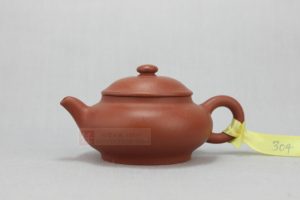
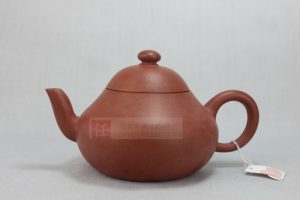
Lastly but not the least, some people say Pot No:387 is figured like a low Neolithic Jade Cong , some say it looks like a Xia/Shang/Zhou Bronze Dui (see pictures of Neolithic Jade Cong and archaic Bronze Dui) and some say it looks like a perfect Low Lantern-shaped Zhuni Hu. The Pot has a short neck, looped handle, the flat knob and lid both tapering at the edge to give a harmonious symmetry, three curves spout and raised circular foot base which is identical to the neck and can look like a inverted neck. The Potter’s name Meng Chen Zhi is seal in regular script and the inscriptions are in seal script which say “ Do not be greedy for other people’s money “.
In symbolic language, a Jade Cong symbolizes high position, purity and moral integrity. And if it’s a Low Lantern-shaped Zhuni Pot , the body, if you take out the lid and without the handle and spout, will be in perfect symmetry even if turned upside down. We might call it a Low Lantern and Jade Cong-shaped Zhuni Hu.
最后,但至少,正如我们之前所警告的,在回答和解决一些谜团或谜题时会有更多的问题,比如惠孟臣创作的革命朱泥壶,能否把宜兴茶壶生产的权力基础从宜兴转移到景德镇,故宫完全控制和监督,我们对此有着完全的控制和监督个人认为,是因为任富收藏出土的清乾龙(八、十三)年惠孟臣朱泥壶,刻在景德镇生产的青白陶瓷上(见壶号149、功夫茶具组),羊角山的发掘没有朱泥壶,只有紫砂泥壶,直到现在没有发现任何证据证明我们的故事是正确的和真实的,也就是说,朱泥壶是在景德镇而不是宜兴制造的。这和许多等待发现和解决的故事,需要时间和发掘,任富收藏要《拯救老紫砂泥茶壶》,特别是发现老紫砂壶的真相,保护他们免受有组织诈骗者的假锅和假故事的侵害。
顺便说一下,在我们终止大帖子之前,这就像一本关于惠孟臣的小书本,有人这样说,“聪明人只需要问一个简单的问题,知道惠孟臣什么时候生活”:
问题是,我们都知道神秘的老陶艺家惠孟臣是最有名、最受欢迎的,他在明末做了壶,那么,明末著名的晚期紫砂壶历史学家周高起为何在《阳羡茶壶录》一书中没有提及自己的名字(宜兴古名有很多:荆溪;阳羡,只有宋代才叫宜兴)
我们知道你们聪明人会说,简单问题的答案是,惠孟臣的晚明壶并没有给周高起和惠孟臣留下深刻印象,而著名的潮流设置小朱泥壶,只是在周高起去世(1646)后才出炉。
请享受任富收藏的历史“一带一路”考古记录。
还有别的,我们差点犯了一个可怕的错误,把所有回孟辰考古材料、所有孟辰壶的记录和照片交给了组织诈骗犯蔡克辛,他非常渴望抓住我们的回蒙陈的东西。试想一下,他和胡旺茹一起,试图骗我们128个壶,我们给蔡英文的照片写下我们的第一本灾难性、最毒的书,想象如果我们把有组织的骗子蔡克罪,3913个罐子的考古资料送给我们,会发生什么……是的,那将是一场噩梦,一个自杀的错误,不是吗?但请放心,外面的好人,我们已经学到了我们的教训,永远不要再相信台湾人。(除了少数,大多数是欺骗和不诚实的)
P/s…..
一些商界朋友说,我们应该把这个耸人听闻的、非常罕见的、真实的惠梦辰的故事卖给《茶》、《艺术》或《古董》杂志。惠孟臣壶号387上的底款写着:“莫贪身外之财,孟臣制。”也就是说不要贪心、不道德的赚钱,表明惠孟臣是一个平等、道德正直的人。明朝始皇洪武出家,出身贫寒,下令平民、富贵、文人、贵族,一视同仁,一视同仁。没有洪武帝制茶的敕令(即只用茶叶),惠孟臣就做不成他的革命小朱泥壶,没有惠孟臣的革命朱泥壶,任富收藏也不会能挖到第387号壶,给大家讲讲惠孟臣的真实故事…..
所以我们任富收藏,为了拯救壶老紫砂壶,本着惠孟臣和洪武帝的精神,决定免费与天下好人分享惠梦臣发现这个伟大的大故事。
别的,我们差点犯了一个可怕的错误,把所有的惠孟臣考古材料和所有惠孟臣的记录和照片都交给了有组织的骗子,他非常渴望得到我们的惠孟臣壶。试想一下,他和胡万如一起骗了我们128把壶,我们给蔡格森写了我们第一本灾难性和最毒的书的照片,并想象如果我们给蔡格森,会发生什么有组织的骗子,3913 个壶的考古材料……是的,这将是一场噩梦,一个自杀式错误,不是吗?但是请放心,你们这些好人,我们已经吸取了巨大的教训,永远不要再相信台湾人了。(除了少数,大多数都是欺骗和不诚实的)。
有点八卦我们听到紫砂湖专家朋友说,“任福收藏的壶号:387比时大彬或陈鸣远的壶更值钱”,但我们说,惠孟臣壶的价值是否超过时大彬或陈鸣远壶的价值不重要,因为重要的是我们解开了神秘的惠孟臣,现在知道他是历史上最伟大的老陶艺家。
我们将科学和艺术结合在一起,但在解决惠孟臣谜团或谜题时,我们尽可能地忽略了猜测,因为在紫砂壶这样一个非常混乱的生态系统中,基于猜测、谎言、虚假事实的相互矛盾的意见,假故事,假壶,特别是有组织的骗子长期存在,在解决有关老紫砂壶的历史问题时,必须采用科学的方法而不是猜测,因为我们有考古证据表明朱泥壶是在景德镇而不是宜兴制造的,这是否意味着在清初被认为是朱泥壶黄金时代的朱泥壶被认为比其他紫砂壶更优越?或者根据史学家徐傲润的说法,时大彬生于1573年(万历一年),卒于1662年(康熙一年),享年89岁,是不是说时大彬在那里见证了惠孟臣的大事?惠孟臣做了他的革命小朱泥壶?
想象一下,当你根据考古证据和科学运用你的想象力时,你能实现什么,就像阿尔伯特·爱因斯坦曾经说过的那样,“想象力比知识更重要”。
最后但并非最不重要的一点是,有人说387号壶的形状像一个低矮的新石器玉琮,有人说它看起来像一个夏/商/周青铜敦(dui)(见新石器玉琮和古青铜敦的照片)还有一些人说它看起来像一个完美的低灯笼形状的朱泥壶。壶有一个短颈,环形手柄,平把手和盖子都在边缘逐渐变细,以营造出和谐的对称感,三个曲线壶嘴和凸起的圆形脚底,与颈部相同,看起来像倒置的颈部。陶艺家惠孟臣为篆书,篆书题为“莫贪身外之财,孟臣制”。
在象征性语言中,玉琮象征着地位高、纯洁、品德高尚。而如果是低灯笼朱泥壶,壶体如果取下壶盖,没有把手和壶嘴,倒过来也能完美对称。我们可以称之为低灯笼玉琮形朱泥壶。