

Notice: We do not need you good people to put Likes on Ren Fu Collection’s Facebook postings or praise Ren Fu Collection’s postings in the China on-line Blogs. We need you to tell more good people who do not know about Ren Fu Collection’s battle to save Old Zisha Hus to come and support us. This is the only way we are going to save Old Zisha Hus by action by using “People’s Power” because Old Zisha Hu is facing an existential threat due to increasing fake facts, fake stories and organized frauds. Organized fraudsters are especially a big threat to the survival of Old Zisha Hu like a supporter of Ren Fu Collection recently warned in his post that Ma Wei Du is now dealing in Fake Zisha Hus because he was taught by organized fraudsters that Fake Pots are genuine Old Pots and Ma Wei Du cannot see Old Zisha Pots. This good informer also warned in no uncertain terms that with big names like Ma Wei Du dealing in Fake Zisha Pots like the organized fraudsters, what hope is there for Old Zisha Hus?, Old Zisha Hu is finished and doomed to destruction unless a strong and trusted name can rise up to save Old Zisha Hus.And you good people know that that strong and trusted name: yes, Ren Fu Collection.
On another subject, we are sorry we stop selling Pots for three years because of the Covet-19 but we are happy to inform you buyers who keep asking about our Pots for sale, that we are opened for business again and you can resume buying from us.Please when you buy ask for Ren Fu Collection’s new Certificate of Authenticity which will prove your Pots were bought from Ren Fu Collection and therwefore are 100% genuine old. What is more every Pot Number in the Certificate is linked to archaeological records kept in Ren Fu Collection. They are for study and research and for buyers who want to know the original owner, owner’s details and history of the Pot in question. Please keep the Certificate of Authenticity because it is the only one in the world that provides archaeological details. It is one way to fight Fake Zisha Hus because they do not have any proven documentation or archaeological records.
注意:我们不需要各位好人在任富收藏的Facebook帖子上点赞或在中国在线博客中为任富收藏的帖子点赞。我们需要您告诉更多不知道任富收藏拯救老紫砂壶的好人来支持我们。这是我们要通过“人民的力量”以行动拯救老紫砂壶的唯一途径,因为由于虚假事实、虚假故事和有组织的欺诈行为的增加,老紫砂壶正面临着生存威胁。有组织的骗子对老紫砂壶的生存威胁尤其大,就像任富收藏的支持者最近在他的帖子中警告说,马未都收藏家现在正在网上讲座假紫砂壶,因为有组织的骗子告诉他假壶是真正的老壶和马未都先生看不到老紫砂壶。这位好的告密者也毫不含糊地告诫说,像有组织的骗子一样,像马未都这样的大牌在经营假紫砂壶,老紫砂壶还有什么希望呢?信得过的名字能升起来救老紫砂壶,你们好人都知道那个强大可信的名牌:是的,任富收藏。
在另一个问题上,我们很抱歉因为 Covet-19 我们停止销售壶三年,但我们很高兴地通知您一直询问我们待售 壶的买家,我们再次营业,您可以继续从我们这里购买时,请索取任富收藏的新的真品证书,这将证明您的老壶是从任富收藏购买的,因此是 100% 正品旧的。更重要的是,证书上的每个壶号都与任富收藏中的考古记录挂钩。它们用于学习和研究,以及想要了解原主人、主人的详细信息和相关壶的历史的买家。请保留真品证书,因为它是世界上唯一提供考古细节的证书。这是打击假紫砂壶的一种方法,因为他们没有任何经过证实的文件或考古记录。
PRE-DAOGUANG GONG FU TEA WARES………………………………………………………………
In 1990, in QianYuan Village, Chiling Town, ZhangPu County, Fujian Province, the grave of Lan Gui Wei, who died on the 23rd Year of Emperor Qian Long’s reign, was excavated. In the grave, among other relics of the past, were found a set of Gong Fu tea wares comprising a small Ming Yuan Zhuni Pot, four Roushen teacups and a dish( only the other Gong Fu tea wares like water boiler and burner are missing but the metal tea caddy is not considered part of the Gong Fu tea wares). Never mind what the experts believe that the Pot was actually made in Yongzheng 4th year reign, this Gong Fu tea wares were the first and only archaeologically excavated Gong Fu tea wares in the world before the advent of Ren Fu Collection’s huge archaeological trove. The only archaeologically excavated Gong Fu tea wares in the world, even though grossly insufficient, was the most precious for study and research on Gong Fu Tea based on true and accurate facts but now help is at hand which makes that lonely archaeological discovery in mainland China just a drop in the ocean as compared to Ren Fu Collection’s huge archaeological trove.(the 3913 excavated Pots mostly with Gong Fu tea wares)
Due to the huge ‘Gong Fu Tea’ archaeological trove and the lack of professional experience on the part of Tony Ren, we intend to enlist the help of the professors and scholars in universities and national Chinese tea culture research units whom we are sending 100 books to, each book together with a note about saving Old Zisha Hus. Therefore due to the fact that the huge ‘Gong FuTea’ archaeological trove is too big for one person like Tony Ren to do by himself, which will be incomplete and unsatisfactory by professional standards, and until professional helps come, we will just briefly go through Ren Fu Collection’s excavated Gong Fu tea wares with archaeological records in the first One Thousand Pots.(1190 Pots: 705 Zisha Pots and 485 Santoh Zhuni Pots) which are more than enough to prove our archaeological discoveries.
According to Ren Fu Collection’s simple study and observations, the rules for excavated Gong Fu tea wares, for all intent and purposes, followed some simple patterns. Firstly, Pot was at the top of the Gong Fu tea wares chain or the most important if you prefer. It had to be a Zhuni Pot for the wealthy, influential and powerful(like for example Guangren) as a rule but there were exceptions or on a lower social status, it could be an ordinary Zisha Pot or Santoh Zhuni Pot(Gong Fu tea wares with ceramic teapot were the exception rather than the rule). Secondly, the next most important Gong Fu tea wares were the Roushen teacups. These two, Zhuni Pot and Roushen teacups, were mandatory status symbols of the wealthy and influential Chinese people in Pre-Daoguang times with some even practicing not just Gong Fu tea art but Cha Dao too as proven by the poems and calligraphies on beautiful Gaiwans and/or big burners.
One can imagine if we travelled back in time to a Pre-Daoguang everyday scene where guests were invited to a Chinese home and tea was served. The guests could not see the best tea but could only taste it after the tea leaves were brewed in a Zhuni Pot and served in the Roushen teacups. The small Zhuni Pot and small Roushen teacups are the reasons tea tasted the best including the best aroma and color, so that fine quality tea can be appreciated. However, the host could showed off the best Pot and teacups which could be easily seen by the guests immediately upon arrival and some hosts even had exquisite Gong Fu tea set for display and not for use, like big burner or Gaiwan inscribed with Cha Dao poems or calligraphies.(see excavated Gaiwan and burners with Cha Dao poems)
Two very interesting areas for exploration, among the vast expanse of Ren Fu Collection’s huge archaeological trove that needed study and research is to determine whether there were two Gong Fu tea cultures: a Fujian Gong Fu tea that started in Early Kangxi and peaked in Qian Long, and a Chao Zhou Gong Fu tea that started in Early Qian Long and peaked in Daoguang , the former using Zhuni Pot and the latter using Santoh Zhuni Pot, and also whether women created Gong Fu Tea instead of men.
Bearing in mind further professional study and research are needed and a lot of hidden and valuable archaeological information are waiting to be discovered, here is a glimpse into a small part of Ren Fu Collection’s excavated Gong Fu tea wares belonging to Ren Fu Collection’s first One Thousand Pots(we only show a little portion of our “1st One Thousand Pots” archaeological trove to prevent the fraudulent use of Ren Fu Collection’s archaeological material and data)) which we hope to hand over to the study and research units of the Chinese tea culture in China and the rest of the world, together with those of the second and third One Thousand Pots:


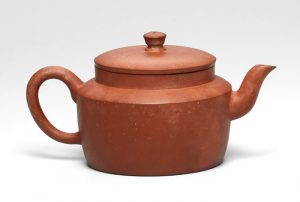
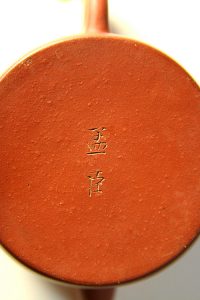
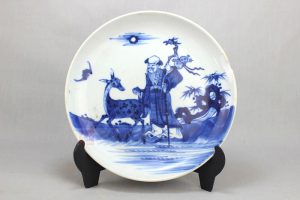
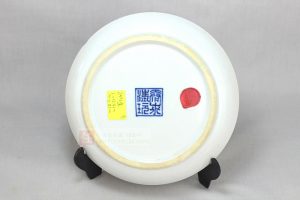


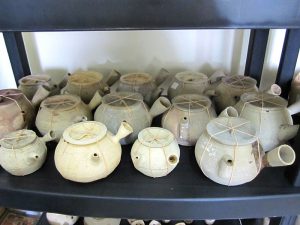

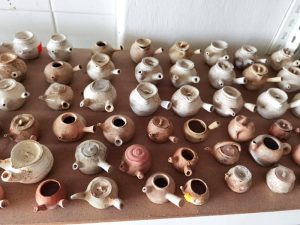
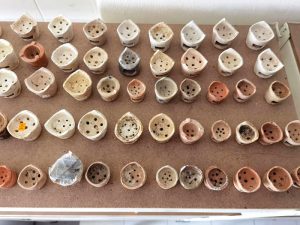
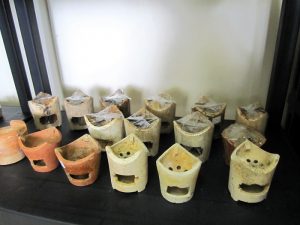
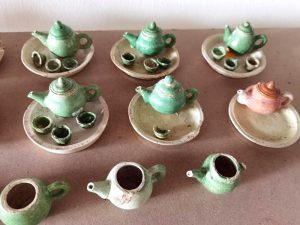
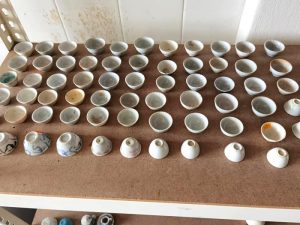


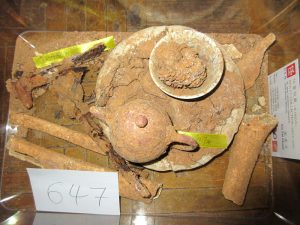

- Pre-Daoguang Gong Fu Tea Zhuni Pots