
WHO INVENTED GONG FU TEA?…………………………………………………….
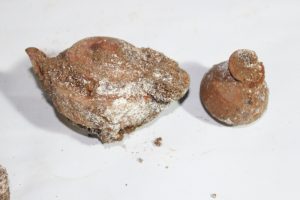
China is in the process of applying for Gong Fu Tea to be included in the UNESCO list of Intangible World Cultural Heritage. We wish the Chinese all the luck and much more than that we can also help China be more successful in its application by providing archaeological proofs of the origin and birth date of Gong Fu Tea which so far depended only on one documented and one archaeological proofs which is not strong or sufficient enough to convince UNESCO. And it will be a terrible shame for China if Gong Fu Tea is not listed in UNESCO as one of the Intangible World Cultural Heritage because Gong Fu Tea was the greatest tea culture and at its height in Qian Long’s reign enjoyed a Golden Age which reverberated throughout the world especially Europe which experienced a Chinoiserie craze revolving around tea culture. Ren Fu Collection’s huge archaeological trove of excavated Pre-Daoguang Gong Fu tea wares, found in the Nanyang, proved that Gong Fu Tea was not just confined within the national boundary of China but had great influences around the world.
Why was Gong Fu Tea the greatest tea culture in the world?
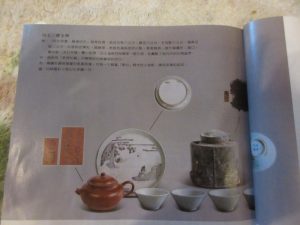



 However there is a Fujian claim that could be used and the only one acceptable for consideration which implied Gong Fu Tea started in Fujian, China. Yang Li Ren, a distinguished professor of Zhangzhou University of Science and Technology wrote and this is a part or extract of his story/thesis we have chosen:
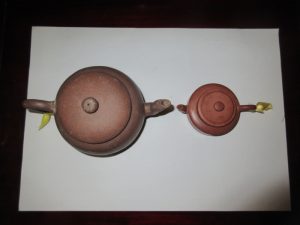
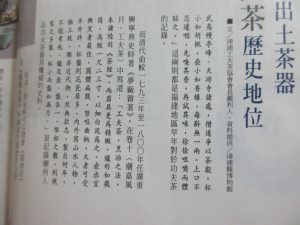
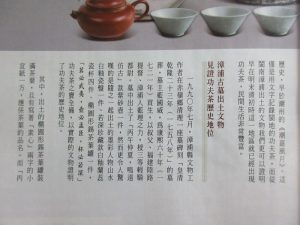
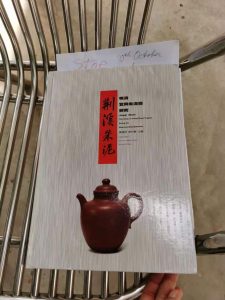
The earliest written record of the method of making tea is found in the book titled, “ Min Suo Ji”, written by Peng Guang Dou, a retired magistrate of Yong’an County, Fujian in the Early Qing Dynasty (Qian Long 31st Year Reign or 1766). In it he described meeting an old Fujian man drinking Wuyi tea from small teacups and brewed in small Lantern-shaped Pot(most likely small Lantern-shaped Meng Chen Zhuni Pot) and thereafter surprised to see many old people in Longxi(modern Zhangzhou) infatuated with drinking oolong tea(one kind of Wuyi tea) in small pots and cups.(see extract from book)
And there are also other stories but we choose this part of the story based on documented proof because Ren Fu Collection’s huge archaeological trove has many Gong Fu tea wares excavated from graves and tombs belonging to Fujians from Longxi, Fujian(also called Zhangzhou nowadays). But most amazing of all, we discovered the earliest Gong Fu tea wares belonged to Fujians and not just any Fujian but Fujians from a certain part of Fujian province, namely, Longxi or other area of modern-day Zhangzhou. Distinguished professor Yang Li Ren also noticed: Yu Jiao, a native of Zhejiang Province, wrote(in 1793-1800) about Gong Fu tea but it was at least 30 years later than Peng Guang Dou’s book, “Min Suo Ji” which means the Fujian version is more reliable proof because it was earlier and nearer to Early Kangxi, the timeline of the beginning of Gong Fu Tea.
What are the archaeological proofs that Ren Fu Collection has to convince the scholars, professors or PHD-level academic guests especially the likes from UNESCO who are going to be invited to Ren Fu Collection’s coming exclusive exhibition?
Firstly as all of you know by now, what is claimed or believed by Chinese tea culture scholars and experts that is Gong Fu Tea started in Early Kangxi: we are very happy to say Ren Fu Collection’s huge archaeological trove of Gong Fu tea wares have proven beyond any doubt that it was indeed in Early Kangxi that Gong Fu Tea began.(for those learners who did not know or follow, please refer to Ren Fu Collection’s previous postings). In fact, truth be told, without the discovery of Gong Fu Tea, we would not have so vividly so unwaveringly in our judgement saw a profound connection that led to the greatest Chinese tea culture discovery of all times: the archaeological discovery of the real Small Meng Chen Zhuni Pot which inspired Gong Fu Tea. And even though finding Gong Fu Tea and the Small Meng Chen Zhuni Pot which sparked it off are the most important, we also possess archaeological proofs who invented Gong Fu Tea.
Before Ren Fu Collection appeared on the scene, the only documented proof of who created Gong Fu Tea is found in the distinguished professor Yang Li Ren’s research finding in which he quoted the book written by a magistrate in Yong’an, Fujian Province in 1766(Qian Long 31st Year Reign) titled, “Min Suo Ji”. The book was a truthful caricature of Fujian tea culture during Qian Long’s reign in which people especially old Fujian people were seen everywhere drinking tea from small teacups and brewed in small teapots resembling Gong Fu Tea. This recorded events in Fujian tea culture history are admissible as proofs but would be stronger and very convincing if the events took place in Kangxi or even to put it beyond any doubt if it’s in Early Kangxi when Gong Fu Tea began.
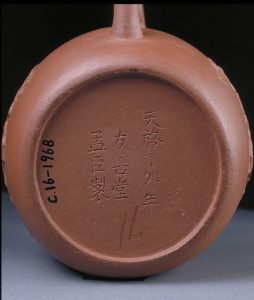
Yes Ladies and Gentlemen, Ren Fu Collection has the perfect archaeological proofs and not just all the perfect archaeological proofs beyond any reasonable doubt that Fujians started Gong Fu Tea because we also have sensational proof that it was a Fujian who owned the real Small Meng Chen Zhuni Pot No:387 which must in a way not only point to the fact that the Fujian was the earliest collector of the earliest Small Meng Chen Zhuni Pot but also reinforced implicitly the fact that it was the Fujian who invented Gong Fu Tea. See timeline of excavated Meng Chen Zhuni Pots belonging to Fujian below:
However there is a Fujian claim that could be used and the only one acceptable for consideration which implied Gong Fu Tea started in Fujian, China. Yang Li Ren, a distinguished professor of Zhangzhou University of Science and Technology wrote and this is a part or extract of his story/thesis we have chosen:
The earliest written record of the method of making tea is found in the book titled, “ Min Suo Ji”, written by Peng Guang Dou, a retired magistrate of Yong’an County, Fujian in the Early Qing Dynasty (Qian Long 31st Year Reign or 1766). In it he described meeting an old Fujian man drinking Wuyi tea from small teacups and brewed in small Lantern-shaped Pot(most likely small Lantern-shaped Meng Chen Zhuni Pot) and thereafter surprised to see many old people in Longxi(modern Zhangzhou) infatuated with drinking oolong tea(one kind of Wuyi tea) in small pots and cups.(see extract from book)
And there are also other stories but we choose this part of the story based on documented proof because Ren Fu Collection’s huge archaeological trove has many Gong Fu tea wares excavated from graves and tombs belonging to Fujians from Longxi, Fujian(also called Zhangzhou nowadays). But most amazing of all, we discovered the earliest Gong Fu tea wares belonged to Fujians and not just any Fujian but Fujians from a certain part of Fujian province, namely, Longxi or other area of modern-day Zhangzhou. Distinguished professor Yang Li Ren also noticed: Yu Jiao, a native of Zhejiang Province, wrote(in 1793-1800) about Gong Fu tea but it was at least 30 years later than Peng Guang Dou’s book, “Min Suo Ji” which means the Fujian version is more reliable proof because it was earlier and nearer to Early Kangxi, the timeline of the beginning of Gong Fu Tea.
What are the archaeological proofs that Ren Fu Collection has to convince the scholars, professors or PHD-level academic guests especially the likes from UNESCO who are going to be invited to Ren Fu Collection’s coming exclusive exhibition?
Firstly as all of you know by now, what is claimed or believed by Chinese tea culture scholars and experts that is Gong Fu Tea started in Early Kangxi: we are very happy to say Ren Fu Collection’s huge archaeological trove of Gong Fu tea wares have proven beyond any doubt that it was indeed in Early Kangxi that Gong Fu Tea began.(for those learners who did not know or follow, please refer to Ren Fu Collection’s previous postings). In fact, truth be told, without the discovery of Gong Fu Tea, we would not have so vividly so unwaveringly in our judgement saw a profound connection that led to the greatest Chinese tea culture discovery of all times: the archaeological discovery of the real Small Meng Chen Zhuni Pot which inspired Gong Fu Tea. And even though finding Gong Fu Tea and the Small Meng Chen Zhuni Pot which sparked it off are the most important, we also possess archaeological proofs who invented Gong Fu Tea.
Before Ren Fu Collection appeared on the scene, the only documented proof of who created Gong Fu Tea is found in the distinguished professor Yang Li Ren’s research finding in which he quoted the book written by a magistrate in Yong’an, Fujian Province in 1766(Qian Long 31st Year Reign) titled, “Min Suo Ji”. The book was a truthful caricature of Fujian tea culture during Qian Long’s reign in which people especially old Fujian people were seen everywhere drinking tea from small teacups and brewed in small teapots resembling Gong Fu Tea. This recorded events in Fujian tea culture history are admissible as proofs but would be stronger and very convincing if the events took place in Kangxi or even to put it beyond any doubt if it’s in Early Kangxi when Gong Fu Tea began.
Yes Ladies and Gentlemen, Ren Fu Collection has the perfect archaeological proofs and not just all the perfect archaeological proofs beyond any reasonable doubt that Fujians started Gong Fu Tea because we also have sensational proof that it was a Fujian who owned the real Small Meng Chen Zhuni Pot No:387 which must in a way not only point to the fact that the Fujian was the earliest collector of the earliest Small Meng Chen Zhuni Pot but also reinforced implicitly the fact that it was the Fujian who invented Gong Fu Tea. See timeline of excavated Meng Chen Zhuni Pots belonging to Fujian below:





 The interesting questions are: how did and why did Gong Fu Tea become such a very sophisticated, complete and matured tea art( in such a short span of time? (considering the time lapsed between the invention of the Small Meng Chen Zhuni Pot in Shunzhi/Late Chongzhen and the start of Gong Fu Tea in Early Kangxi =<>40 years)
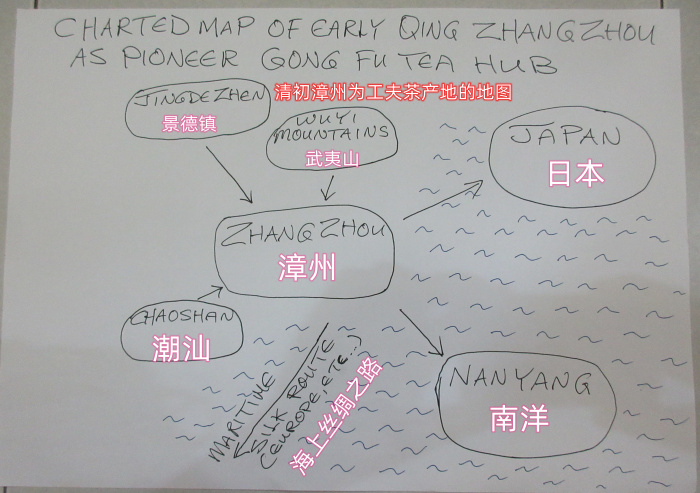
Surely, one of the answers if not the biggest reason, must be the big incentive of making money again especially after the ‘hungers’ created by the money-depleting wars and the opportunity of supplying the insatiable foreign markets like Japan, Nanyang and Europe while at the same time proudly showing off to the world the sublime Fujian’s creation in particular and great Chinese tea culture in general. Whether Gong Fu Tea was created as a result of a big business opportunity first and metamorphosed into tea art later or the other way round: tea art first and then on realization of Gong Fu tea wares’s market potential, transformed into a big business We will share these archaeological discoveries with the experts of Chinese tea culture in universities and museums and hope they can shed more light and insights into this opaque Transition Period than we could based on the biggest archaeological trove in the world found only in Ren Fu Collection. And also in the exclusive exhibition where only invited guests like PHD researchers, professors and scholars of universities and museums, we will show archaeological proofs of Gong Fu Tea, its Fujian founders and the Fujian owner of Pot No:387.
Lastly but not the least, why wasn’t Gong Fu Tea which was such a monumental and hugely successful tea culture, documented by any tea culture scholar or historian? Was it because of the wars in the Transitional Period or other reasons? Anyhow, the only documented history of Gong Fu Tea was found in the book written by a Fujian magistrate in Yong’an County, Fujian in 1766( Qian Long 31st Year Reign) called “ Min Suo Ji” who depicted the everyday life of the tea drinking Fujian old folks at that time but not earlier like for example in Early Kangxi or around that time of Gong Fu Tea’s founding.
Note: Our findings included recognizing the fact that Gong Fu Tea did not start as a sudden complete and matured knowledge of tea art or tea ritual, or a formal or socially recognized tea art or tea ritual whatever the case might be, but a gradual development or improvement revolving around one common denominator, the Small Meng Chen Zhuni Pot, from the founding Kangxi period to the most matured and complete Qian period which saw Gong Fu Tea at its best with a Small Meng Chen Zhuni Pot in most Gong Fu tea wares.
有趣的问题是:工夫茶是如何以及为什么在如此短的时间内成为如此复杂、完整和成熟的茶艺? /崇祯晚期和康熙初期工夫茶的开始=<>40年)
当然,如果不是最大的原因,答案之一肯定是再次赚钱的巨大动力,尤其是在消耗金钱的战争造成的“饥饿”以及供应日本、南洋和欧洲等无法满足的外国市场的机会之后。同时自豪地向世界展示了特别是崇高的福建创造和中国伟大的茶文化。工夫茶是先因大商机而诞生,后变身为茶艺,还是反过来:先茶艺,再挖掘工夫茶具的市场潜力,转为大业。这些考古发现与大学和博物馆的中国茶文化专家一起,希望他们能够对这个不透明的过渡时期提供更多的启示和见解,而不是我们基于仅在任富收藏中发现的世界上最大的考古宝藏。而在只邀请博士研究人员、大学教授、学者和博物馆等嘉宾的独家展览中,我们将展示工夫茶的考古证据,它的福建创始人和壶号:387的福建主人。
最后但并非最不重要的一点是,为什么没有任何茶文化学者或历史学家记载的如此具有纪念意义和巨大成功的茶文化的功夫茶?是因为过渡时期的战争还是其他原因?无论如何,唯一有记载的工夫茶历史,是在1766年(乾隆三十一年)福建永安县知县写的一本名为《闽锁记》的书中,描述了茶的日常生活。那时喝福建老人,但不是更早,例如康熙初期或工夫茶创立前后。
注:我们的研究结果包括认识到工夫茶并不是突然间对茶艺或茶道知识的完整和成熟,也不是正式的或社会认可的茶艺或茶道,而是逐渐发展的。或围绕一个共同点——小孟臣朱泥壶的改进,从开国康熙时期到最成熟、最完整的乾隆时期,在大多数工夫茶具中,小孟臣朱泥壶是工夫茶的巅峰之作。
The interesting questions are: how did and why did Gong Fu Tea become such a very sophisticated, complete and matured tea art( in such a short span of time? (considering the time lapsed between the invention of the Small Meng Chen Zhuni Pot in Shunzhi/Late Chongzhen and the start of Gong Fu Tea in Early Kangxi =<>40 years)
Surely, one of the answers if not the biggest reason, must be the big incentive of making money again especially after the ‘hungers’ created by the money-depleting wars and the opportunity of supplying the insatiable foreign markets like Japan, Nanyang and Europe while at the same time proudly showing off to the world the sublime Fujian’s creation in particular and great Chinese tea culture in general. Whether Gong Fu Tea was created as a result of a big business opportunity first and metamorphosed into tea art later or the other way round: tea art first and then on realization of Gong Fu tea wares’s market potential, transformed into a big business We will share these archaeological discoveries with the experts of Chinese tea culture in universities and museums and hope they can shed more light and insights into this opaque Transition Period than we could based on the biggest archaeological trove in the world found only in Ren Fu Collection. And also in the exclusive exhibition where only invited guests like PHD researchers, professors and scholars of universities and museums, we will show archaeological proofs of Gong Fu Tea, its Fujian founders and the Fujian owner of Pot No:387.
Lastly but not the least, why wasn’t Gong Fu Tea which was such a monumental and hugely successful tea culture, documented by any tea culture scholar or historian? Was it because of the wars in the Transitional Period or other reasons? Anyhow, the only documented history of Gong Fu Tea was found in the book written by a Fujian magistrate in Yong’an County, Fujian in 1766( Qian Long 31st Year Reign) called “ Min Suo Ji” who depicted the everyday life of the tea drinking Fujian old folks at that time but not earlier like for example in Early Kangxi or around that time of Gong Fu Tea’s founding.
Note: Our findings included recognizing the fact that Gong Fu Tea did not start as a sudden complete and matured knowledge of tea art or tea ritual, or a formal or socially recognized tea art or tea ritual whatever the case might be, but a gradual development or improvement revolving around one common denominator, the Small Meng Chen Zhuni Pot, from the founding Kangxi period to the most matured and complete Qian period which saw Gong Fu Tea at its best with a Small Meng Chen Zhuni Pot in most Gong Fu tea wares.
有趣的问题是:工夫茶是如何以及为什么在如此短的时间内成为如此复杂、完整和成熟的茶艺? /崇祯晚期和康熙初期工夫茶的开始=<>40年)
当然,如果不是最大的原因,答案之一肯定是再次赚钱的巨大动力,尤其是在消耗金钱的战争造成的“饥饿”以及供应日本、南洋和欧洲等无法满足的外国市场的机会之后。同时自豪地向世界展示了特别是崇高的福建创造和中国伟大的茶文化。工夫茶是先因大商机而诞生,后变身为茶艺,还是反过来:先茶艺,再挖掘工夫茶具的市场潜力,转为大业。这些考古发现与大学和博物馆的中国茶文化专家一起,希望他们能够对这个不透明的过渡时期提供更多的启示和见解,而不是我们基于仅在任富收藏中发现的世界上最大的考古宝藏。而在只邀请博士研究人员、大学教授、学者和博物馆等嘉宾的独家展览中,我们将展示工夫茶的考古证据,它的福建创始人和壶号:387的福建主人。
最后但并非最不重要的一点是,为什么没有任何茶文化学者或历史学家记载的如此具有纪念意义和巨大成功的茶文化的功夫茶?是因为过渡时期的战争还是其他原因?无论如何,唯一有记载的工夫茶历史,是在1766年(乾隆三十一年)福建永安县知县写的一本名为《闽锁记》的书中,描述了茶的日常生活。那时喝福建老人,但不是更早,例如康熙初期或工夫茶创立前后。
注:我们的研究结果包括认识到工夫茶并不是突然间对茶艺或茶道知识的完整和成熟,也不是正式的或社会认可的茶艺或茶道,而是逐渐发展的。或围绕一个共同点——小孟臣朱泥壶的改进,从开国康熙时期到最成熟、最完整的乾隆时期,在大多数工夫茶具中,小孟臣朱泥壶是工夫茶的巅峰之作。



- Which tea culture in the world used the finest and best tea leaves produced from the most knowledgeable and experienced processing sources descended from and evolved through thousands of years?
- Which tea culture in the world used Yixing teapots, which are the best teapot to make tea, the healthiest non-toxic and iron-rich teapot only found in Yixing, China, to make tea.(and the mainstay of Gong Fu Tea was the small Zhuni Pot, the finest of the Zisha Pots)?
- Which tea culture in the world used the finest, exquisite porcelain Roushen teacups, which were made in Jingdezhen, the world center for porcelain excellence, to drink tea?
- Not to mention the other exquisite Gong Fu tea wares like exquisite porcelain dishes(tea boats) with Emperor’s reign-marks and calligraphic poems, water boilers(kettles) and exquisite, aesthetically beautiful burners(stoves) with calligraphic poems and designs.
- Which tea culture in the world incorporated tea ritual, tea art and Cha Dao(meditation on life and philosophy).
- Most of all, which tea culture in the world maximized the highest quality tea by promoting the highest compatibility between tea and tea wares that was(still is) found only in Gong Fu Tea? And the perfect Gong Fu Tea as shown and archaeologically proven by Ren Fu Collection’s excavated trove of Gong Fu tea wares, was about the best tea leaves brewed in the legendary Small Meng Chen Zhuni Pot and served in the exquisite Roushen teacups including the other remaining part of the ritual set of five tea utensils: the dish, water boiler and burner which together form a complete, mature and sophisticated repertoire of Gong Fu tea wares for the most sublime of tea-drinking experience to suit the demanding and sophisticated taste of the Chinese who invented Gong Fu Tea and who were also the wealthy merchants, traders and Guangrens plying the most prosperous trade route in the world at that time: the Maritime Silk Route( also called the Spice Route) passing through Nanyang. In fact Nanyang was probably becoming the largest global trading center for Chinese tea and Gong Fu tea wares, among other things, at that time of Gong Fu Tea’s birth in Early Kangxi when Jingdezhen opened for business again in 1683( Kangxi 21st year reign) at the end of the Transition Period and when East met West for trade officially resumed.
- 世界上哪种茶文化使用了最上乘、最上乘的茶叶,这些茶叶是由数千年来最有知识和最有经验的加工来源所生产的?
- 世界上哪个茶文化用世界瓷器中心景德镇出产的上等、精美的瓷器若深茶杯来喝茶?
- 世界上哪些茶文化融合了茶道、茶艺和茶道(人生观和哲学观)。
- 最重要的是,世界上哪种茶文化通过促进茶与茶器之间的最高兼容性而最大限度地提高了最高品质的茶,而这在当时(仍然)只存在于工夫茶中?任富收藏出土的工夫茶具,经考古证实,完美的工夫茶,大约是传说中的小孟臣朱泥壶中冲泡出的最好的茶叶,并盛在精致的若深茶杯中,包括其余部分。五种茶具:盘、烧水器、炉具,共同构成了一套完整、成熟、精致的工夫茶具,提供最崇高的饮茶体验,以适应中国人苛刻和精致的口味他发明了工夫茶,也是当时世界上最繁荣的商路:海上丝绸之路(又称香料之路)穿越南洋的富商、商人和官人。事实上,南洋国家可能正在成为全球最大的中国茶叶和工夫茶具贸易中心,其中包括康熙初年工夫茶诞生之时,当时景德镇于 1683 年(康熙二十一年)在过渡期结束,当东西方贸易正式恢复。
However there is a Fujian claim that could be used and the only one acceptable for consideration which implied Gong Fu Tea started in Fujian, China. Yang Li Ren, a distinguished professor of Zhangzhou University of Science and Technology wrote and this is a part or extract of his story/thesis we have chosen:
The earliest written record of the method of making tea is found in the book titled, “ Min Suo Ji”, written by Peng Guang Dou, a retired magistrate of Yong’an County, Fujian in the Early Qing Dynasty (Qian Long 31st Year Reign or 1766). In it he described meeting an old Fujian man drinking Wuyi tea from small teacups and brewed in small Lantern-shaped Pot(most likely small Lantern-shaped Meng Chen Zhuni Pot) and thereafter surprised to see many old people in Longxi(modern Zhangzhou) infatuated with drinking oolong tea(one kind of Wuyi tea) in small pots and cups.(see extract from book)
And there are also other stories but we choose this part of the story based on documented proof because Ren Fu Collection’s huge archaeological trove has many Gong Fu tea wares excavated from graves and tombs belonging to Fujians from Longxi, Fujian(also called Zhangzhou nowadays). But most amazing of all, we discovered the earliest Gong Fu tea wares belonged to Fujians and not just any Fujian but Fujians from a certain part of Fujian province, namely, Longxi or other area of modern-day Zhangzhou. Distinguished professor Yang Li Ren also noticed: Yu Jiao, a native of Zhejiang Province, wrote(in 1793-1800) about Gong Fu tea but it was at least 30 years later than Peng Guang Dou’s book, “Min Suo Ji” which means the Fujian version is more reliable proof because it was earlier and nearer to Early Kangxi, the timeline of the beginning of Gong Fu Tea.
What are the archaeological proofs that Ren Fu Collection has to convince the scholars, professors or PHD-level academic guests especially the likes from UNESCO who are going to be invited to Ren Fu Collection’s coming exclusive exhibition?
Firstly as all of you know by now, what is claimed or believed by Chinese tea culture scholars and experts that is Gong Fu Tea started in Early Kangxi: we are very happy to say Ren Fu Collection’s huge archaeological trove of Gong Fu tea wares have proven beyond any doubt that it was indeed in Early Kangxi that Gong Fu Tea began.(for those learners who did not know or follow, please refer to Ren Fu Collection’s previous postings). In fact, truth be told, without the discovery of Gong Fu Tea, we would not have so vividly so unwaveringly in our judgement saw a profound connection that led to the greatest Chinese tea culture discovery of all times: the archaeological discovery of the real Small Meng Chen Zhuni Pot which inspired Gong Fu Tea. And even though finding Gong Fu Tea and the Small Meng Chen Zhuni Pot which sparked it off are the most important, we also possess archaeological proofs who invented Gong Fu Tea.
Before Ren Fu Collection appeared on the scene, the only documented proof of who created Gong Fu Tea is found in the distinguished professor Yang Li Ren’s research finding in which he quoted the book written by a magistrate in Yong’an, Fujian Province in 1766(Qian Long 31st Year Reign) titled, “Min Suo Ji”. The book was a truthful caricature of Fujian tea culture during Qian Long’s reign in which people especially old Fujian people were seen everywhere drinking tea from small teacups and brewed in small teapots resembling Gong Fu Tea. This recorded events in Fujian tea culture history are admissible as proofs but would be stronger and very convincing if the events took place in Kangxi or even to put it beyond any doubt if it’s in Early Kangxi when Gong Fu Tea began.
Yes Ladies and Gentlemen, Ren Fu Collection has the perfect archaeological proofs and not just all the perfect archaeological proofs beyond any reasonable doubt that Fujians started Gong Fu Tea because we also have sensational proof that it was a Fujian who owned the real Small Meng Chen Zhuni Pot No:387 which must in a way not only point to the fact that the Fujian was the earliest collector of the earliest Small Meng Chen Zhuni Pot but also reinforced implicitly the fact that it was the Fujian who invented Gong Fu Tea. See timeline of excavated Meng Chen Zhuni Pots belonging to Fujian below:
- The earliest known and archaeologically excavated Small Zhuni Meng Chen Zhuni Pot belonged to a Fujian who died in Shunzhi/Late Chongzhen.(refer to Pot No:387).
- The Early Kangxi graves/tombs with Gong Fu tea wares belonged to Fujians and no Gong Fu tea wares were found in non-Fujian Early Kangxi graves/tombs so far.
- The Middle to Late Kangxi graves/tombs with Gong Fu tea wares belonged again to Fujians and the non-Fujian graves/tombs especially Guangdong/Chao Zhou graves contained non-Gong Fu tea wares like solitary Zisha/Zhuni Pot, burner and water boiler without Pot/teacups or just a single cauldron or nothing at all. (Note: We know through our vast knowledge and experiences of excavating thousands of graves/tombs that we can tell grave or tombs were Fujian just by looking at the epitaphs or grave courts or excavated things like oyster shells, fish hooks, etc..or a Fujian family burial ground or a general big old Fujian burial site. Maybe there were one or two non-Fujian graves that possessed Gong Fu tea wares but we could not find one).
- Yongzheng and Qian Long started to see mixed Chinese graves/tombs(that were Fujians, Cantonese, Chao Zhou, Guangxi, Hainanese, Jiangsu, Jiangxi etc..) containing Gong Fu tea wares even though the graves/tombs were mostly Fujian.
- In Jiaqing and especially Daoguang graves/tombs mostly Guangdong( Cantonese and Chao Zhou), Gong Fu tea wares containing Santoh Zhuni Pot were found.
- 已知最早出土的小孟臣朱泥壶为福建人,死于顺治/崇祯晚期。(见壶号:387)。
- 康熙中后期工夫茶具的墓葬又归福建人所有,非福建墓葬尤其是广东/潮州墓葬有非工夫茶具,如紫砂壶(朱泥壶)、炉具和水锅、茶杯或只有一个大锅或根本没有的锅炉。 (注:我们知道通过我们丰富的知识和电子出土几千个坟墓的经历,只要看墓志铭或墓地,或出土的蚌壳、鱼钩之类的东西,就知道是福建人的坟墓。 福建墓地。 也许有一两个非福建人的坟墓里有工夫茶具,但我们找不到一个)。
- 雍正和乾隆开始看到混杂的中国坟墓/坟墓(即福建人、广东人、潮州人、广西人、海南人、江苏人、江西人等),尽管这些坟墓/坟墓大多是福建人。
- Until now no Chao Zhou graves in Early Kangxi contain Gong Fu tea wares.
- Until now no Chao Zhou graves even in Middle and Late Kangxi contain Gong Fu tea wares.(even though there possibly could be one or two but we could not find one)
- Even when Gong Fu tea wares were found in Chao Zhou/Guangdong graves of the Qian Long period, most of the finest Gong Fu tea wares belonged to Fujians and not Chao Zhou or Guangdong people.
- Daoguang Chao Zhou graves/tombs in Thailand contained mostly Gong Fu Santoh Zhuni Pots.(the finest quality Santoh Zhuni Pots were found in Qian Long reign).
- Santoh Zhuni Pots were created in Yongzheng/Early Qian Long to be either a part of Gong Fu Tea or possibly separately as Chao Zhou Gong Fu Cha to compete with or provide a cheaper alternative to Fujian Gong Fu Tea.
- 清康熙初期潮州墓至今无工夫茶具。
- 直到清康熙中后期的潮州墓葬都没有工夫茶具。
- 泰国清代道光潮州墓葬多为工夫汕头朱泥壶。(品质最好的汕头朱泥壶出土于乾隆时期)。
- 汕头朱泥壶是在清雍正/乾隆早期创建的,既可以作为功夫茶的一部分,也可以单独作为潮州功夫茶与福建功夫茶竞争或提供更便宜的替代品。
The interesting questions are: how did and why did Gong Fu Tea become such a very sophisticated, complete and matured tea art( in such a short span of time? (considering the time lapsed between the invention of the Small Meng Chen Zhuni Pot in Shunzhi/Late Chongzhen and the start of Gong Fu Tea in Early Kangxi =<>40 years)
Surely, one of the answers if not the biggest reason, must be the big incentive of making money again especially after the ‘hungers’ created by the money-depleting wars and the opportunity of supplying the insatiable foreign markets like Japan, Nanyang and Europe while at the same time proudly showing off to the world the sublime Fujian’s creation in particular and great Chinese tea culture in general. Whether Gong Fu Tea was created as a result of a big business opportunity first and metamorphosed into tea art later or the other way round: tea art first and then on realization of Gong Fu tea wares’s market potential, transformed into a big business We will share these archaeological discoveries with the experts of Chinese tea culture in universities and museums and hope they can shed more light and insights into this opaque Transition Period than we could based on the biggest archaeological trove in the world found only in Ren Fu Collection. And also in the exclusive exhibition where only invited guests like PHD researchers, professors and scholars of universities and museums, we will show archaeological proofs of Gong Fu Tea, its Fujian founders and the Fujian owner of Pot No:387.
Lastly but not the least, why wasn’t Gong Fu Tea which was such a monumental and hugely successful tea culture, documented by any tea culture scholar or historian? Was it because of the wars in the Transitional Period or other reasons? Anyhow, the only documented history of Gong Fu Tea was found in the book written by a Fujian magistrate in Yong’an County, Fujian in 1766( Qian Long 31st Year Reign) called “ Min Suo Ji” who depicted the everyday life of the tea drinking Fujian old folks at that time but not earlier like for example in Early Kangxi or around that time of Gong Fu Tea’s founding.
Note: Our findings included recognizing the fact that Gong Fu Tea did not start as a sudden complete and matured knowledge of tea art or tea ritual, or a formal or socially recognized tea art or tea ritual whatever the case might be, but a gradual development or improvement revolving around one common denominator, the Small Meng Chen Zhuni Pot, from the founding Kangxi period to the most matured and complete Qian period which saw Gong Fu Tea at its best with a Small Meng Chen Zhuni Pot in most Gong Fu tea wares.
有趣的问题是:工夫茶是如何以及为什么在如此短的时间内成为如此复杂、完整和成熟的茶艺? /崇祯晚期和康熙初期工夫茶的开始=<>40年)
当然,如果不是最大的原因,答案之一肯定是再次赚钱的巨大动力,尤其是在消耗金钱的战争造成的“饥饿”以及供应日本、南洋和欧洲等无法满足的外国市场的机会之后。同时自豪地向世界展示了特别是崇高的福建创造和中国伟大的茶文化。工夫茶是先因大商机而诞生,后变身为茶艺,还是反过来:先茶艺,再挖掘工夫茶具的市场潜力,转为大业。这些考古发现与大学和博物馆的中国茶文化专家一起,希望他们能够对这个不透明的过渡时期提供更多的启示和见解,而不是我们基于仅在任富收藏中发现的世界上最大的考古宝藏。而在只邀请博士研究人员、大学教授、学者和博物馆等嘉宾的独家展览中,我们将展示工夫茶的考古证据,它的福建创始人和壶号:387的福建主人。
最后但并非最不重要的一点是,为什么没有任何茶文化学者或历史学家记载的如此具有纪念意义和巨大成功的茶文化的功夫茶?是因为过渡时期的战争还是其他原因?无论如何,唯一有记载的工夫茶历史,是在1766年(乾隆三十一年)福建永安县知县写的一本名为《闽锁记》的书中,描述了茶的日常生活。那时喝福建老人,但不是更早,例如康熙初期或工夫茶创立前后。
注:我们的研究结果包括认识到工夫茶并不是突然间对茶艺或茶道知识的完整和成熟,也不是正式的或社会认可的茶艺或茶道,而是逐渐发展的。或围绕一个共同点——小孟臣朱泥壶的改进,从开国康熙时期到最成熟、最完整的乾隆时期,在大多数工夫茶具中,小孟臣朱泥壶是工夫茶的巅峰之作。